

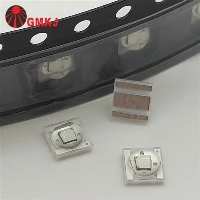
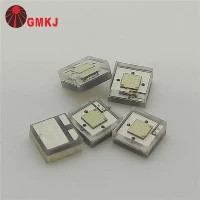


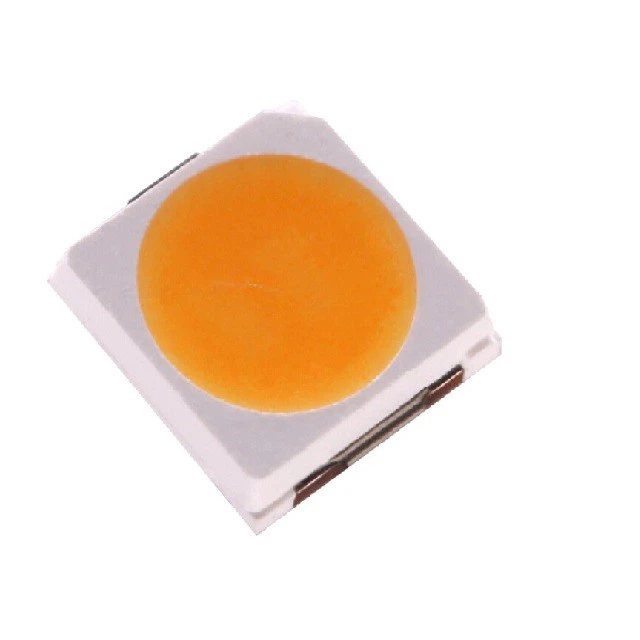

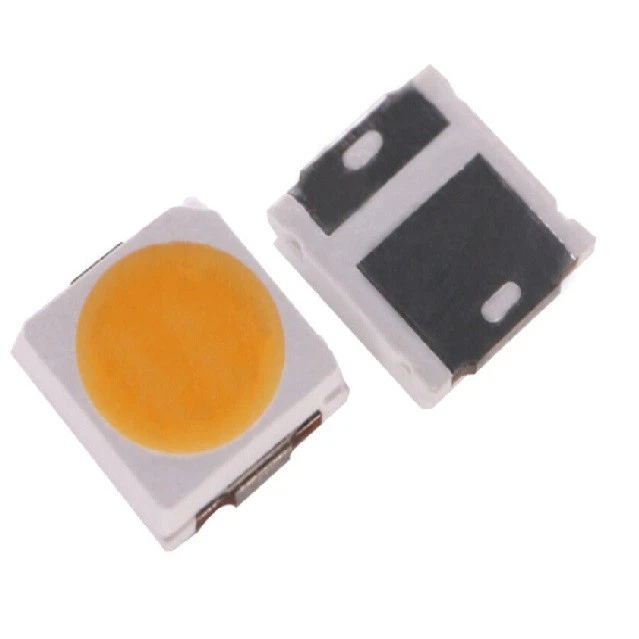
Full Spectrum EMC 3030 LED for grow light

Absolute Maximum Ratings(At TA =25℃)
Parameter | Symbol | Rating | Unit |
DC Forward Current (正向电流) | IF | 450 | m A |
Peak pulse Current* (脉冲电流) | IFP | 900 | m A |
Power Dissipation (功率) | PD | 1.5 | W |
Reverse Voltage (反向电压) | VR | 5 | V |
Reverse Current (反向电流) | IR | 10 | μ A |
Operating Temperature Range (工作温度) | TOPR | -30 ~ +75 | °C |
Storage Temperature Range (储存温度) | TSTG | -40 ~ +85 | °C |
LED Junction Temperature (结点温度) | TJ | 120 | °C |
Electrical/Optical Characteristics--White (At TA=25°C)
Parameter | Symbol | Conditions | Min | Avg. | Max | Units |
Forward Voltage (正向压降) | VF | IF=300mA | 2.80 | -- | 3.40 | V |
Thermal Resistance Junction To Board (热阻) | RΘJ-B | IF=300mA | -- | 8 | -- | °C/W |
Luminous Flux (光通量) | Φv | IF=300mA | 150 | 160 | lm | |
Color Temperature (色温) | CCT | IF=300mA | 6000 | 6500 | K | |
CRI (显色指数) | Ra | IF=300mA | 80 | -- | -- | -- |
Temperature Coefficient of Forward Voltage (正向压降之温度系数) | ∆VF/∆T | IF=300mA | −− | -2 | −− | mV/°C |
Reverse Current (反向漏电流) | IR | VR=5V | −− | −− | 10 | μ A |
Viewing Angle [1] (发光角度) | 2Θ1/2 | IF=300mA | −− | 120 | −− | Deg |
Effect of LED light quality on crop formation, leaf photosynthetic pigment and bud differentiation:
The effect of LED light quality on the flowering of crops. It has been found that there are 5 different gene-coded phytochromes (PhyA~PhyE) in Arabidopsis. PhyA and PhyB are not necessary for flowering induction, but they are involved in the regulation of flowering time. PhyA is overexpressed in plants to bloom earlier, and PhyB delays the flowering of plants. PhyA participates in the "extremely low radiation response" and the far red light "high radiation response knife, while PhyB participates in the "low radiation response" and the red light "high radiation response". Therefore, the far red and blue LEDs promote flowering, while the red light Light plays an inhibitory role. In addition, some people have studied the effect of light quality on flower bud differentiation from the aspects of nutrient supply and other aspects. The higher amino acid content and energy material strength under LED blue light The flower bud differentiation and flower development of chrysanthemum provide cell structure components and energy Under this treatment, the number of buds and the number of flowers per plant of chrysanthemum were both higher than those of the control.
The effect of LED light on the formation of photosynthetic pigments in leaves. Photosynthetic pigments can absorb, transmit and convert light energy, and are the material basis for photosynthesis of plants. Its content and composition directly affect the photosynthetic rate of leaves. LED blue light can promote the formation of chlorophyll in hyacinth callus, while red light reduces its total chlorophyll content. Compared with pure red light, when red light is mixed with blue light, yellow light and orange light, respectively, the promotion of chlorophyll synthesis in sorghum, cucumber and sorghum leaves is weaker; when blue light is mixed with other light, these three kinds of light The promotion of plant chlorophyll synthesis is relatively large. It is also believed that this effect of mixed light is due to the fact that when pure red light or pure blue light is mixed with light of other wavelengths, the content of phytochrome in the activated state changes, and the activation of cryptochrome is also different, which causes a variety of different Biological effects. Chlorophyll a is an important photosynthetic pigment, it can transfer the absorbed light energy to the photosynthetic chemical reaction center. Blue light can increase the chlorophyll a content of a variety of algae plants, so plants cultivated with LED blue light generally have higher chlorophyll a/b values, while plants cultivated with red light have lower chlorophyll a/b. Carotenoids are auxiliary pigments of chloroplast photosynthetic antennas, which can receive light energy from the moderator chlorophyll. Studies have shown that LED light quality can affect the carotenoid content of coffee leaves, especially the synthesis of different types of carotenoids. Compared with white light, yellow light, red light, and blue light all reduce the carotenoid content of lettuce. Red light can reduce the carotenoid content of hyacinth callus.
The effect of LED light quality on the differentiation of crop buds, and the effects of light of different wavelengths on crops inducing bud formation are different. As underground buds, the occurrence of small bulbs and protocorms of lily and tiger head orchid does not depend on light quality, while the adventitious buds of African violets and variegated crabapples as ground buds and above-ground buds, LED red light has a promoting effect, blue light Tobacco has an inhibitory effect against darkness; blue light is beneficial to the formation of adventitious buds in tobacco, while red light and darkness have an inhibitory effect. Short-wave light can promote the growth of tobacco buds at a lower intensity, while long-wave light needs to be at a higher light intensity to promote buds.

The effect of LED light quality on plant seed germination and root growth:
The effect of LED light quality on the germination of plant seeds. When the seeds absorb water, their germination is often affected by light. The germination of light-demanding seeds is jointly regulated by PhyA and PhyB. The promoting effect of LED red light on seed germination is mainly regulated by PhyB. The main function of PhyB is to sense changes in the ratio of R/FR. Whether the seed can fully germinate and grow is mainly determined by the R/FR ratio of the light it receives subsequently. A lower R/FR ratio inhibits the germination of the seed. Cucumber seeds can germinate under the blue light of LED, but the continuous irradiation of red light inhibits the germination of cucumber seeds. Under the light quality that can promote germination, the peroxidase activity in the seeds will continue to increase with time, and become stable after the cotyledons are opened: under the LED light quality that inhibits germination, the peroxidase activity in the seeds Always maintain a very low level.
The effect of LED light quality on the growth of crop roots. In herb plants, light can pass through the internal light environment and be regulated by photoreceptors from the ground to the roots and regulate their growth and development. Although the root system does not directly receive the light bar, it responds differently to different light qualities. LED blue light is beneficial to the growth and development of plant roots. Blue light can increase the root vigor, total absorption area and active absorption area of seedlings. Irradiating the cultivated rice seedlings with LED blue light, it is found that the accumulated protein content in the root system of the rice seedlings is high, the non-protein nitrogen content is low, the ratio of protein to nitrogen to total nitrogen is high, and the total nitrogen content is also high, indicating that the LED blue light can increase the root nitrides of the rice seedlings. The synthesis and production of protein accumulate in the root system. At present, seedling raising based on the LED blue light effect of crop roots has been applied by reproducers.
GMKJ provides a lot of different color 3030 smd leds here:


Full Spectrum SMD LED 3030 2835 1 Watt Chip package size:

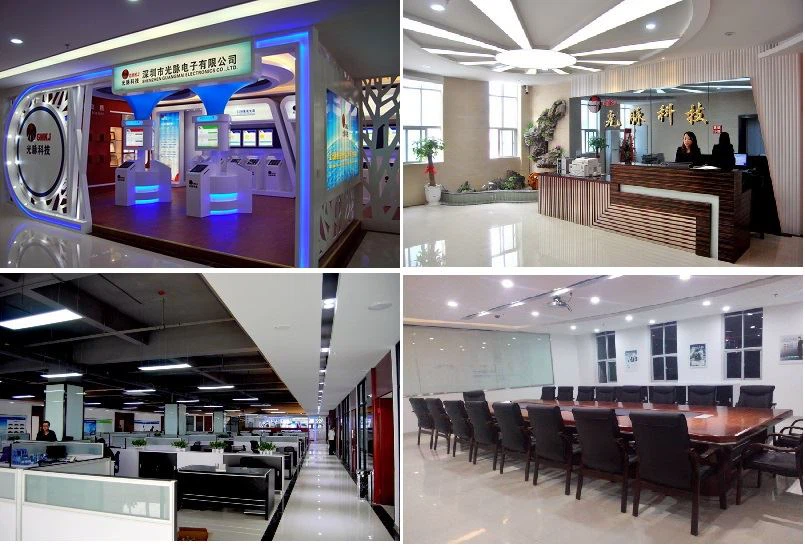
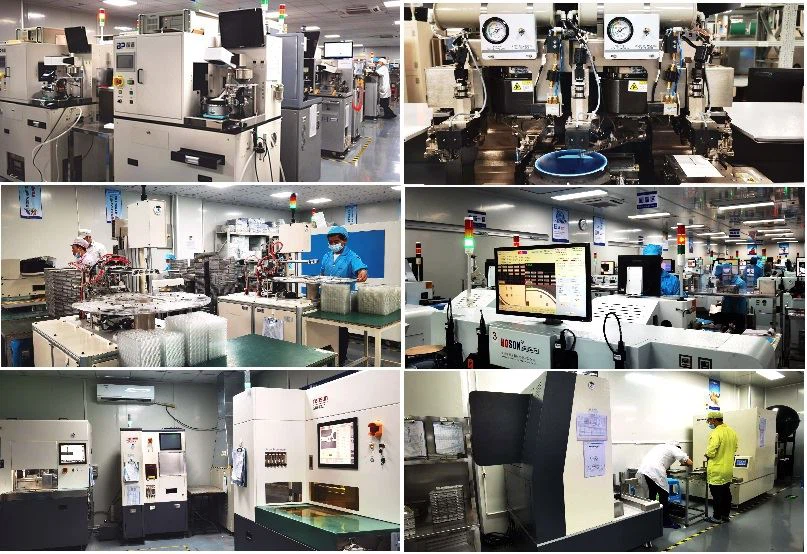
About Guangmai LED/ GMKJ LED
Our Business partner:

Datasheet:
You can download the English Version datasheet of Full Spectrum EMC 3030 LED for grow light from the head of this page.
Hot Tags: full spectrum emc 3030 led for grow light, China, manufacturers, suppliers, factory, price, cheap, quotation, datasheet, specs, specification, red diode, deep blue led, LED 5050 Rgbw 4W, royal blue led chip, 2835 red led, uv led 265nm


