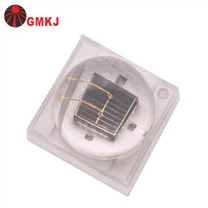
How does the UV glue curing lamp dry? What is the working principle of the UV glue curing lamp? UV curing adhesive is composed of basic resin, active monomer, photoinitiator and other main components, stabilizer, crosslinking agent, coupling agent and other auxiliary agents. The UV glue curing lamp is irradiated with UV light of the appropriate wavelength, the photoinitiator quickly generates free agent or ion, and then initiates the polymerization and cross-linking of the basic resin and the active monomer to form a network structure, so as to achieve the bonding of the adhesive material.
How does the UV glue curing lamp dry? What is the working principle of the UV glue curing lamp?

1.1.6 Theoretically, cationic polymerized monomer can be used for cationic curing. It can be cationically polymerized or copolymerized with various monomer materials through heterocyclic compounds such as olefin, epoxy, ketal, vinegar, silicone, etc. Obtain better physical and chemical properties. The basic resin of this kind of mechanism curing film appeared in the late 1980s, including vinyl ether series and epoxy series. Vinyl ether resins can be obtained by the reaction of 311 vinyl ether and corresponding resins. But so far the most commonly used or modified epoxy resin or epoxy resin, mainly used epoxy resin and bisphenol A epoxy resin, silicone resin, epoxidized polybutadiene, epoxidized natural rubber, etc. The most commonly used is bisphenol A epoxy resin, but its viscosity is higher and aggregation is slower; aliphatic epoxy compounds generally polymerize faster, among which 3,4-epoxycyclohexyl carboxylate-3,4- Epoxy cyclohexyl methyl ester (CY179) is the most commonly used cationic curing aliphatic epoxy resin. Its low viscosity, aggregation and rapidity can be used with bisphenol A epoxy resin. Epoxy compounds have a small ring-opening shrinkage rate. On the basis of some polycyclic compounds, light-curing compositions have also been used. UV glue curing lamps can expand in volume during the polymerization process, such as the original acetate in the ring-opening process. The hourly volume expansion rate is 1.5%. The vinyl ether compound is rich in electrons and can be used as a cationic curing polymerization reactor or diluent.
On the one hand, the diluent plays a role of diluting, making the adhesive easy to handle; on the other hand, it plays a role of cross-linking, so it must have good reactivity. After curing, it enters the resin network and has a great influence on the final performance of the cured product. Reactive diluents are usually added to improve viscosity, adhesion, flexibility, hardness and curing speed. The mechanical properties of different diluents may be very different from those of the base resin. Mainly for its low viscosity, high dilution and high reaction ability, as well as volatility, toxicity, low irritation and unpleasant odor, low price, high stability and good resin compatibility and other requirements. Diluents are commonly used to adjust various properties.
1.2.1 Free radical active diluent The free radical active diluent is divided into the first-generation acrylic multifunctional monomer developed earlier, the second-generation acrylic multifunctional monomer and the third-generation acrylic monomer recently developed. The first generation of acrylate multifunctional monomers are 1,6-propylene glycol acrylate (HDDA), 2,1,4-butanediol acrylate (BDDA), propylene glycol acrylate (DPGDA), glycerol acrylate (TPGDA) and three Methyl propane acrylate functional group (TMPTA) and pentaerythritol triacrylate (PETA), mainly light-based triethylene glycol acrylate methyl propane (TMPTMA), etc. They replaced the first generation of low-reactivity acrylic monofunctional monomers. However, with the rapid development of ultraviolet curing technology, it exposes a huge disadvantage of skin irritation. Therefore, the second and third generation acrylic monomers have been developed to overcome the shortcomings of high irritation, high activity and high degree of curing. Mainly introduce ethoxy or oxygen radicals into the second-generation acrylic acid multifunctional monomer molecules, such as ethoxylated triethylene glycol acrylate methyl propane (TMP (EO) TMA), c oxygen trifluoromethane Ethylene glycol acrylate methyl propane TMP (PO) TMA). Oxygen glyceryl triacrylate c G(PO)TA o The third-generation acrylic monomer mainly contains methoxy acrylate, which better solves the contradiction between high curing speed and high shrinkage rate and low curing degree. Such products mainly include 1,6-hexanediol methoxy monoacrylate (HDOMEMA), ethoxyoxy neopentyl methoxy monoacrylate (TMP (PO) MEDA), adding alkoxy in the molecule The base can reduce the viscosity of the monomer and reduce the irritation of the monomer. In addition, the introduction of the alkoxy group of the ultraviolet light glue water curing lamp greatly improves the compatibility of the diluent monomer.

1.4 Other additives
The main functions of auxiliary equipment are:
The production process of refined adhesives;
Increase the storage stability of colloidal substances;
Improve the construction performance of the adhesive;
Improve the performance of rubber membrane, etc.
UV curing adhesives are mainly stabilizers, leveling agents, defoamers, plasticizers and coupling agents.