

How to Select the Right LED Light Source for Water Quality Monitoring Applications
GMKJ Ceramic 3535 LEDs - Precision Light Sources for COD, TOC, Nitrogen, Chlorine and Multi-Parameter Water Analysis


4
1. Introduction of GMKJ
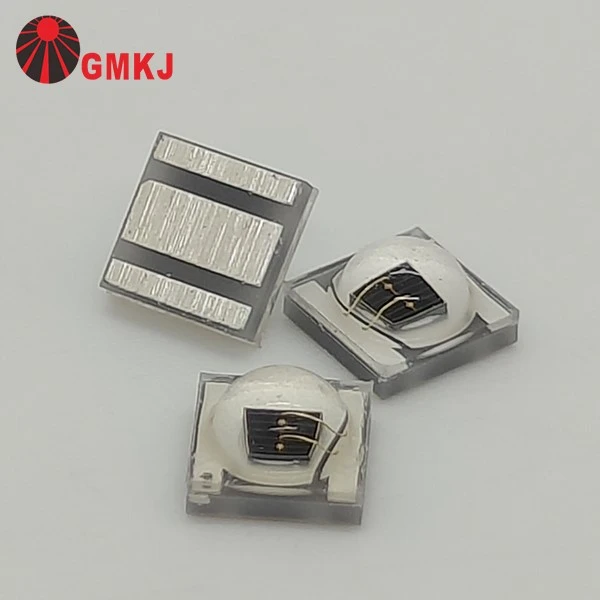
With more than 17 years of experience in advanced LED packaging technology, GMKJ (Guangmai Technology) specializes in high-performance ceramic LED light sources for industrial, medical, scientific, and sensing applications.
Our ceramic 3535 high-power LED platform covers a wide spectral range from deep UV (UVC), UV-A, visible light, to near-infrared (NIR) wavelengths, providing reliable optical solutions for:
Online water quality monitoring systems
Portable multi-parameter water analyzers
Wastewater inspection equipment
Pool chlorine detectors
COD / TOC / Total Nitrogen sensors
Environmental monitoring instruments
For water analysis applications, optical stability and wavelength accuracy are critical. GMKJ LEDs feature:
Precise wavelength control with typical wavelength tolerance of ±2.5nm to ±5nm
Low thermal resistance ceramic substrates for excellent heat dissipation
Long lifetime with stable optical output for continuous operation
Complete optical and reliability test reports
Custom single-wavelength or multi-wavelength LED modules
Our products can help customers develop reliable water analysis instruments and provide a competitive alternative to imported optical components from major international LED suppliers.
2. Why Ceramic 3535 LEDs Are Ideal for Water Quality Detection
Water quality monitoring equipment often operates continuously in harsh environments, including outdoor monitoring stations, industrial wastewater systems, and portable testing devices.
Compared with conventional LED packages, GMKJ ceramic 3535 LEDs provide several advantages:
Excellent Thermal Management
The ceramic substrate provides lower thermal resistance and better heat dissipation compared with traditional plastic packages.
This helps maintain:
Stable wavelength output
Reduced optical decay
Improved long-term measurement accuracy
Suitable for 24/7 continuous operation in industrial monitoring systems.
High Spectral Accuracy
Accurate wavelength output is essential for optical absorption and colorimetric detection.
GMKJ LEDs provide:
Narrow wavelength distribution
Stable spectral characteristics
Low unwanted emission components
Helping reduce measurement errors caused by wavelength drift.
Uniform Optical Output
Customized optical lenses ensure:
Uniform illumination
Reduced dark areas
Better optical coupling efficiency
Improving repeatability and accuracy in spectroscopic water analysis.
3. Recommended LED Wavelengths for Water Quality Detection
Different water parameters require different wavelengths because various substances have specific absorption characteristics.
A. Deep UV UVC LEDs - COD, TOC, Total Nitrogen and Nitrate Detection

| GMKJ Model | Peak Wavelength | Detection Function | Application |
|---|---|---|---|
| PM-T3535-UVC220 | 220nm | Nitrate and total nitrogen detection based on UV absorption characteristics | Online nitrogen analyzers, environmental monitoring stations |
| PM-T3535-UVC254 | 254nm | COD / TOC detection, organic compound absorption measurement, reagent-free UV monitoring | Wastewater COD sensors, TOC analyzers |
| PM-T3535-UVC275 | 275nm | Compensation wavelength for turbidity and background interference correction | Multi-parameter water analyzers |
Typical Applications:
Wastewater monitoring
Industrial discharge inspection
Drinking water quality analysis
UV absorption-based organic measurement
The combination of 220nm + 254nm + 275nm LEDs can provide a multi-wavelength optical solution for advanced water analysis systems.
B. UVA LEDs - Fluorescence Detection of Organic Pollutants
| GMKJ Model | Peak Wavelength | Detection Function | Application |
|---|---|---|---|
| PM-T3535-UVA365 | 365nm | Excitation source for fluorescent organic compounds and oil contamination detection | Portable water screening devices, river monitoring equipment |
365nm UVA LEDs are commonly used as excitation sources for detecting fluorescent substances such as:
Petroleum-related pollutants
Organic contamination
Fluorescent markers

C. Visible LEDs - Colorimetric Water Analysis
Many water quality parameters are measured through colorimetric reactions, where specific wavelengths are required to analyze the color change of chemical reagents.

| GMKJ Model | Peak Wavelength | Detection Function | Application |
|---|---|---|---|
| PM-T3535-VIS420 | 420nm | Ammonia nitrogen detection using Nessler reagent method | Drinking water and wastewater analyzers |
| PM-T3535-VIS520 | 520nm | Chlorine, nitrite, chromium and metal ion colorimetric detection | Pool testers, portable water meters |
| PM-T3535-VIS620 | 620nm | COD colorimetric measurement after chemical digestion | Laboratory COD analyzers |
| PM-T3535-VIS700 | 700nm | Total phosphorus detection using molybdenum blue method | Lake and environmental monitoring systems |
D. Near Infrared LEDs - Turbidity Measurement
| GMKJ Model | Peak Wavelength | Detection Function | Application |
|---|---|---|---|
| PM-T3535-IR850 | 850nm | Turbidity measurement based on ISO 7027 infrared scattering method | Online and portable water quality instruments |
850nm infrared LEDs are widely used because infrared detection is less affected by water color compared with visible light methods.
Typical applications:
Turbidity sensors
Multi-parameter water analyzers
Environmental monitoring systems
4. GMKJ Recommended LED Solutions for Water Detection Equipment
1. Online Wastewater Monitoring Systems
Recommended LED Solution:
220nm + 254nm + 275nm UVC LED combination + 850nm IR LED
Suitable for:
COD monitoring
TOC analysis
Total nitrogen detection
Turbidity compensation
2. Portable Multi-Parameter Water Analyzers
Recommended LED Solution:
420nm / 520nm / 620nm / 700nm visible LED combination + 850nm IR LED
Suitable for:
Ammonia nitrogen
Total phosphorus
Chlorine
Heavy metal detection
Turbidity measurement
3. Pool and Drinking Water Chlorine Testers
Recommended LED Solution:
520nm Green LED
Advantages:
Compact design
Low power consumption
Cost-effective solution
High measurement repeatability
4. River and Surface Water Fluorescence Monitoring
Recommended LED Solution:
365nm UVA LED + 850nm IR turbidity correction LED
Suitable for:
Organic pollution screening
Environmental water monitoring
Portable inspection instruments
5. Why Choose GMKJ Ceramic 3535 LEDs?
✔ Stable Performance for Long-Term Monitoring
Ceramic packaging provides excellent heat resistance and long-term optical stability for continuous measurement systems.
✔ Customized Optical Solutions
GMKJ supports:
Single wavelength LEDs
Multi-wavelength LED arrays
Customized optical modules
Prototype development and mass production
✔ Complete Technical Documentation
Available technical support includes:
Spectral distribution curves
Optical output reports
Thermal resistance analysis
High/low temperature aging tests
Lifetime evaluation reports
Supporting customers in CE, RoHS and environmental instrument certification processes.
✔ Reliable Alternative to Imported LED Components
GMKJ ceramic 3535 LEDs provide a flexible and cost-effective solution for replacing imported UV, visible and infrared LEDs in water quality monitoring equipment.

Conclusion
The selection of the correct LED wavelength is essential for accurate water quality measurement.
From UVC absorption detection for COD and TOC, to visible colorimetric analysis, and infrared turbidity sensing, GMKJ ceramic 3535 LEDs provide stable, precise and reliable optical solutions for modern water monitoring systems.
With advanced ceramic packaging technology and customized wavelength solutions, GMKJ helps instrument manufacturers develop next-generation water analysis equipment with improved accuracy, reliability and lifetime.


