

What are the advantages and disadvantages of the three types of metal halide lamps, LED lamps and halogen lamps used in aquarium lamps?
I have seen some aquarists use ordinary fluorescent lights, make a beautiful light stand, and then hang a fluorescent light, mainly for appreciation. In fact, if the fluorescent lamp is of that kind of high output (75 watts to 165 watts) and the depth of the fish tank is not too deep, it can also play a certain role. However, today we will mainly talk about the three common lights in aquariums. Metal halide lamps, LED lamps, halogen lamps.
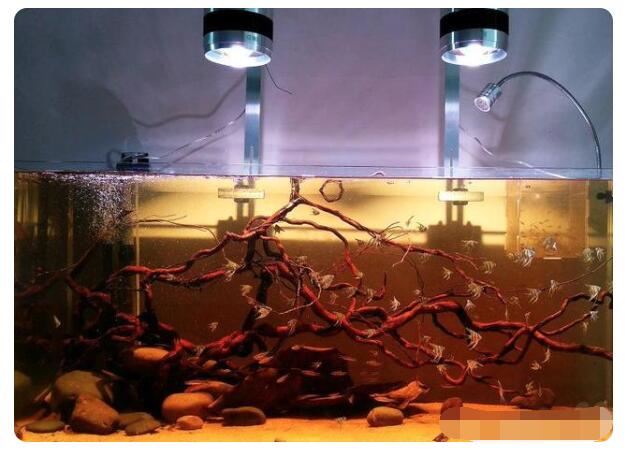
Let's compare and analyze the advantages and disadvantages of the three light sources.
1: Metal halide lamp.
The power of the metal halide lamp ranges from 70 to 1000 watts. Can produce intense light. It is very beneficial for some plants with high light demand. This thing is more practical in industry, such as construction sites, factories, gymnasiums and other scenes. However, many of our aquarists who are good at discovering also use it as aquarium lights.
Advantage:
1: High luminous efficiency, good color rendering, high light color consistency, very close to sunlight.
2: The chromatogram is very extensive, very good for fish tanks dominated by grass.
3: Long life, stable and high performance. Basically, it can be used for one or two years.

Shortcoming:
1: The fever is too big, not very suitable for summer.
2: The metal halide lamp emits some ultraviolet rays. This requires attention, as ultraviolet rays are harmful to organisms. So the lampshade is a must.
2: LED lights.
At present, the mainstream of aquarium lights is also LED lights, and I personally recommend that you choose LED lights.
Advantage:
1: LED lights have low energy consumption.
The low energy consumption of LEDs is very outstanding compared to other lights. You can easily save a lot of electricity bills. Generally speaking, the electricity consumption of LED lights is about 80% less than that of other aquarium lights. This 80% is based on data investigation. In fact, it can be felt that the electricity bill is a lot less. For the grass tank players, they can save a lot of money every year.
2: The LED lamp has a long life.
Most LED lights have a lifespan of up to 100,000 hours. Let’s make a discount, that is, 50,000 hours, 8 hours a day, which is almost more than ten years. The life span of the other two lamps is simply incomparable.

3: LED lights have multiple colors.
Many colors are also a feature of LED lights, so you can adjust them according to your needs.
4: The heat of LED lamp is lower than other lamps.
Metal halide bulbs can cause water temperature problems in the aquarium. If you use LED lights, you can avoid this problem and the water temperature remains more stable.
Shortcoming:
1: The controller is too easy to break
Personally, the most obvious feeling in use is that the lights are not easy to break, but the controller is easy to break, and the replacement cost is high.
2: Heat dissipation
The long life of the LED lamp is also based on the condition of good heat dissipation. If the heat dissipation is not good, the life of the LED lamp will be greatly reduced.
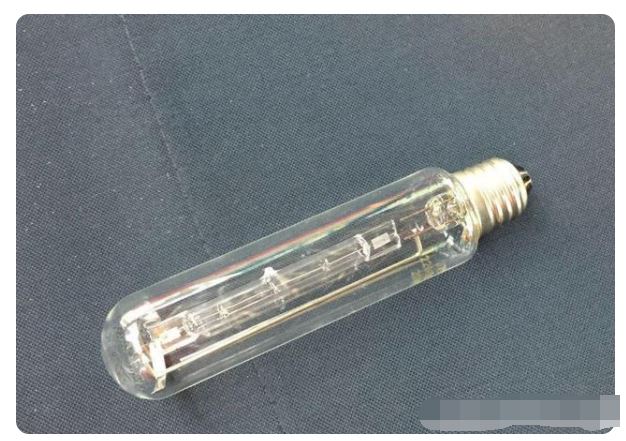
3: Halogen lamp.
This light is more common in some large aquariums.
Advantage:
It is small in size but can emit a lot of light, which is far inferior to other lights. For example, many of our car headlights are also halogen lights.
Shortcoming:
1: The price is too expensive.
2: The halogen lamp generates too much heat and has a great influence on the water temperature of the fish tank.
We compared these three kinds of lights. I personally recommend using LED lights, which are not only relatively cheap but also long-lived and full-spectrum, and there is no need to worry about affecting the water temperature. For now, it is still the first choice for most aquarists.


