

Endoscope LED Light Source Modules: The Future of Medical Imaging Illumination
Introduction
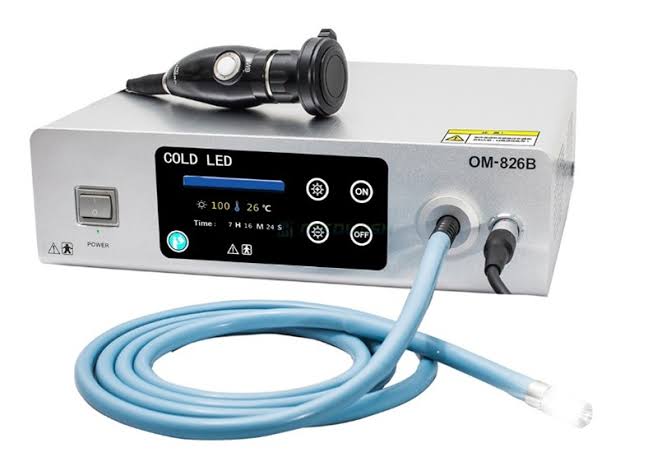
In modern endoscopic systems, image quality is determined not only by the camera and optics but also by the performance of the illumination system. At the heart of every endoscope lies the LED light source module, often referred to as the "lighting engine" of the endoscopic platform.
A high-performance endoscope light source module integrates LED emitters, optical coupling systems, constant-current drivers, thermal management, and fiber-optic interfaces into a compact and reliable solution. It directly influences brightness, color rendering, image clarity, system stability, and operational lifetime.
As the medical industry continues to move away from traditional xenon lamps, LED-based illumination has become the mainstream technology for next-generation endoscopic equipment.

Key Components of an Endoscope LED Light Source Module
1. High-Power LED Engine
The LED package is the core of the system.
Modern medical light sources typically utilize high-power ceramic-packaged LEDs such as 3535 and 5050 packages mounted on high-thermal-conductivity ceramic substrates.
Typical power levels range from:
- 1–10W per emitter
- 30–150W for integrated LED arrays
These systems can achieve illumination levels equivalent to traditional 300–500W xenon lamps while offering significantly lower power consumption and longer operating life.
For medical imaging, critical performance requirements include:
- High CRI (Ra ≥ 95)
- Stable color temperature
- Minimal wavelength shift
- No UV radiation
- Extremely low infrared emission
Low infrared output is especially important because it minimizes tissue heating and improves patient safety during long surgical procedures.
2. Optical Coupling System
The optical system efficiently transfers light from the LED source into the medical fiber bundle.
The optical assembly typically includes:
- Collimating optics
- Focusing lenses
- Homogenizing elements
- Fiber-optic coupling interface
High-end systems can achieve optical coupling efficiencies above 80%, delivering uniform illumination with minimal light loss.
The result is a bright, uniform light field that enhances image quality and color consistency across the surgical scene.
3. Intelligent Constant-Current Driver
Medical-grade LED drivers provide:
- Current accuracy within ±1%
- Flicker-free dimming
- 0–100% brightness control
- Over-voltage protection
- Over-current protection
- Over-temperature protection
- Open-circuit and short-circuit protection
Advanced systems also support RS232, USB communication, foot-switch control, and synchronization with imaging equipment.
4. Thermal Management System
Thermal performance is one of the most critical factors affecting LED reliability.
A well-designed medical light source module typically combines:
- High-conductivity ceramic substrates
- Copper heat spreaders
- Low-noise active cooling systems
Maintaining LED junction temperatures below 85°C significantly extends operating life and reduces lumen depreciation.
Premium medical LED modules can achieve:
- Less than 5% lumen depreciation after 10,000 hours
- Lifetime exceeding 50,000 hours
Emerging Technology Trends
White-Light LED Modules
White-light systems remain the most widely used solution for:
- Laparoscopy
- Arthroscopy
- ENT Endoscopy
- Hysteroscopy
They provide excellent brightness, reliability, and cost efficiency.
Multi-Spectral RGB Modules
Advanced endoscopy systems increasingly employ RGB multi-spectral illumination for:
- Narrow Band Imaging (NBI)
- Enhanced vascular visualization
- Early cancer detection
- Fluorescence imaging
Compared with conventional white-light imaging, multi-spectral systems significantly improve tissue contrast and lesion detection.
Near-Infrared Fluorescence Modules
Near-infrared excitation sources operating in the 750–800nm range are widely used with ICG fluorescence imaging.
Applications include:
- Tumor visualization
- Lymphatic mapping
- Hepatobiliary surgery
- Image-guided procedures
Miniature LED Modules
The rapid growth of disposable and ultra-thin endoscopes has driven demand for miniature LED modules with diameters below 10mm.
These compact modules enable high-quality illumination in next-generation single-use medical devices.
Why Ceramic LED Packaging Is Becoming the Industry Standard
Compared with traditional EMC and PCB-based LED solutions, ceramic-packaged LEDs offer substantial advantages:
- Lower thermal resistance
- Higher reliability
- Improved optical stability
- Longer operating lifetime
- Better resistance to sterilization environments
Aluminum Nitride (AlN) ceramic substrates provide thermal conductivity exceeding 200W/m·K, enabling efficient heat dissipation even under high-power operating conditions.
As medical imaging systems move toward higher brightness, 4K and 8K resolution, fluorescence imaging, and AI-assisted diagnostics, ceramic packaging technology is rapidly becoming the preferred platform for premium endoscope illumination systems.
GMKJ's Expertise in Medical LED Light Source Technology
GMKJ has developed a comprehensive portfolio of ceramic-packaged LED solutions specifically designed for medical illumination applications.
Key technologies include:
- 1414, 1616, 2020, 3535, and 5050 ceramic LED packages
- White-light medical LEDs
- RGB multi-spectral LEDs
- Near-infrared LEDs
- Fluorescence excitation LEDs
- Customized optical and thermal solutions
By utilizing high-performance AlN ceramic substrates and advanced eutectic die-bonding technology, GMKJ products deliver:
- Thermal resistance ≤ 1.8 K/W
- Infrared radiation ≤ 3 mW/lm
- Wavelength shift < 2 nm
- Brightness fluctuation < ±2%
- Lifetime exceeding 50,000 hours
These characteristics make GMKJ solutions ideal for demanding medical imaging applications where reliability, image quality, and patient safety are critical.
Conclusion
The evolution of endoscopic imaging is driving continuous innovation in medical illumination technology. LED light source modules are becoming more powerful, intelligent, compact, and spectrally advanced.
With growing demand for high-definition imaging, fluorescence-guided surgery, and specialized diagnostic techniques, ceramic-packaged LED technology is positioned to become the foundation of next-generation medical light sources.
Through continuous innovation in ceramic packaging, optical design, and specialty LED development, GMKJ remains committed to supporting medical equipment manufacturers with reliable, high-performance illumination solutions for the future of healthcare.


