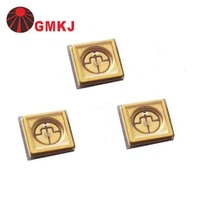
Kill germs with UVC LEDs!
The human struggle against viruses has been going on for a long time. Chemical disinfectants are only limited in their ability to kill because microorganisms, such as viruses and bacteria, can develop resistance. Ultraviolet (UV) light is a more effective method of disinfecting and sterilizing water, air and surfaces, making it a more effective weapon against the coronavirus.
In order to disinfect the protective clothing of medical staff in Wuhan Huoshenshan Hospital to prevent the spread of the new coronavirus to the outside, a disinfection tent with UVC LEDs was built locally, which is a brand new disinfection method. In a room with an area of 1.5m x 0.75m x 2m, a multi-layer synthetic fiber wall is installed, and the reflective surfaces of the ceiling, wall and floor are equipped with UVC emitters from the American supplier Bolb. During the 30-second disinfection process, the UVC LED dosed at 6mJ/cm2 and the brightness was always 200μW/cm2. The 265 to 280nm wavelength of light destroys genetic information, thereby cutting off the spread of the virus or preventing it from infecting other cells.
Artificial UV source
Mercury-based radiation sources have long been used to generate UV light, such as gas using low-pressure and medium-pressure mercury-vapor (Hg) lamps, which produce light in the 185 to 405nm spectrum by gas discharge UV light. Glow discharge can also be used to generate ultraviolet light in the spectral range of 185 to 405 nm by means of ultraviolet cold cathode tubes (UV-CCL or UV lamps).
UV LEDs emit UV rays in the spectral range from 227 to 405 nm through electroluminescence. When UVC LEDs are used, the wavelengths are particularly short (between 260 and 270nm) to provide the strongest germicidal effect. Figure 1 illustrates the example of Cryptosporidium, a parasite that is particularly susceptible to transmission in unpurified drinking water. Other pathogens, bacteria and viruses exhibit very similar characteristics.
LEDs also provide excellent stable spectral output under specific temperature conditions with virtually unlimited number of switching cycles, making them ideal for mobile solutions that require full light output without delay.
Multiple weapons
Ultraviolet light has a wavelength range of 100 to 400 nm and is invisible to the naked eye. Their frequencies are divided into UVA, UVB and UVC bands, and different bands have different effects on organisms.
LEDs allow us to pretty much decide which wavelength to choose. Compared with UVB and UVC rays, UVA LEDs with wavelengths of 315 to 400nm have stronger penetration in dispersed biological tissues such as human skin. UVA LEDs can be used in areas such as dentistry and cosmetics, such as tanning studios and nail studios. In industry, UVA LEDs are used to cure resins, adhesives and paints.
UVB LED rays have wavelengths of 280 to 315nm and have relatively weak penetration of dispersed biological tissue, but they are more diffuse. UVB rays promote the formation of vitamin D in the body, which is why UVB LEDs are mainly used in phototherapy and dermatological treatments.
No protection against UVC rays
High-energy light from UVC LEDs is increasingly scattered in biological tissue. These rays, which have wavelengths of 100 to 280 nm, do not penetrate tissue particularly deeply, but can burn unprotected skin. Since the ozone layer in the Earth's atmosphere absorbs sunlight's natural UVC radiation, nothing on Earth has built a defense mechanism against UVC rays, nor do viruses and bacteria. This vulnerability makes artificial UVC light irradiation a particularly effective method of sterilization and disinfection.

Figure 1: Cryptosporidium and other bacteria and viruses are most sensitive to UVC LED rays, so the wavelengths of UVC LEDs are most effective. Source: Stanley
UVC LEDs in practice
Each microorganism responds differently to UVC radiation, which is why the intensity of the radiation should be adapted to the desired extinction rate, which is the number of microorganisms killed. The intensity of UV radiation is inversely proportional to the square of the distance, which means that UV radiation loses its effectiveness quickly as the distance from the radiation source increases, which is why objects that need to be sterilized should be as close as possible to the emitter.
Viruses, including the new coronavirus, are often airborne, so UVC LEDs are recommended for use in air conditioning systems. In addition to the desired extinction rate, air flow and air flow geometry must also be considered.
Ultraviolet light with a wavelength of 254nm has been shown to be particularly effective at killing microorganisms, although it can be harmful to the skin and eyes when applied directly. On the other hand, "far-ultraviolet" light (207 to 222 nm) can also broadly inactivate most airborne pathogens without damaging exposed human tissue.
Disinfect surfaces
Other viruses and bacteria can also spread through surfaces, including influenza, norovirus, rotavirus, streptococcus, and salmonella. If larger surfaces are to be sanitized, Lextar's low power PU35CL1.0 UVC LED would be a suitable product with an output of 2-4mW and 20mA; it can also be used to pasteurize beverages, for packaging Antibacterial food, and sanitizing toothbrushes.
For smaller scale installations, Bolb introduces the compact mid-power S3535-DR100-W272-P40 UVC LEDs measuring 3.5 x 3.5 x 0.9mm3. With a DC power consumption of 40mW and a current of only 100mA, it stands out with the lowest power consumption and lowest heat output in the world.
In the high power segment, Bolb introduced the S6060-DR250-W272-P100 UVC LED, the most powerful component with a DC power consumption of 100mW at 250mA.
Bolb's UVC LEDs are particularly suitable for drinking water treatment and water disinfection in swimming pools or RVs, as well as applications involving stricter radiation intensity requirements (W/m2), such as industrial filtration systems, air purifiers, medical disinfection boxes and vacuum cleaner.

Figure 2: High Output - Bolb's High Power UVC LEDs have a power consumption of 100mW at 250mA (with and without mounting)
Selection criteria for UV LEDs
A key selection criterion for UV LEDs is the beam angle, which is required in some applications. Bolb's UVC LEDs have a beam angle of 150° and can be further focused using Ledil's lenses as required. Because this reduces the surface being irradiated, it also increases the radiant energy per square meter, which means less exposure time is required when applying the same energy output. Different UV lenses with compatible glass allow easy adjustment of the irradiance output for different purposes. For the UV lenses, Ledil uses a special grade of silicone that is specifically compatible with UVC wavelengths, as well as aluminum mirrors with high reflectivity for all UV wavelengths, especially for disinfection applications.
Other selection criteria for UV LEDs include national UV standards, reflectivity of different materials (Figure 3), thermal management, drivers, power consumption, and the inverse square law, which determine how beam intensity diminishes as it moves away from the source.

Figure 3: Different materials have different levels of UV reflection that must be taken into account during the design phase.
Bolb's Blazar surface emitters meet many of these criteria. This UVC module has 25 LEDs (5×5) and a 55° reflector to achieve 2W effective output while power consumption is only 1.25A.
Currently developing Multi-UV LED products. They use dual-wavelength chips that deliver multiple UV wavelengths, such as UVA and UVC, making them a versatile weapon against viruses, bacteria, and other pathogens.