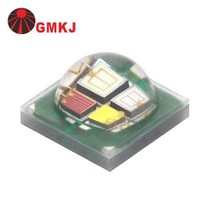
Common light sources include traditional incandescent lamps, emerging energy-saving lamps, and environmentally friendly LED lamps. These light sources have their own advantages and disadvantages. Xiao Lei compares and analyzes the light sources of several eye-protection desk lamps in detail, hoping to answer your doubts.
1. Incandescent lamp
Advantages: The incandescent lamp has a continuous spectrum, which is the closest to natural light, and is an excellent light source.
Disadvantages: high heat generation, dry eyes and swelling of the brain are prone to occur.

2. Energy-saving lamps
Advantages: Energy-saving lamps save electricity and have a longer service life than incandescent lamps.
Disadvantages: The energy-saving light source is not stable enough, and the color temperature is too high, which is dazzling as a close-range lighting.
3. LED lights
Advantages: LED lights are popular with the public because of their small size, long life, low energy consumption, and environmental protection, and there is no flicker and no radiation.
Disadvantages: The price is more expensive, and it is easy to buy fakes.
Through the comparison of the above light sources, it is found that LED lamps are truly eye-protecting light sources. From the perspective of eye protection, LED desk lamps are the first choice. But when choosing, you should carefully check the relevant instructions such as the certificate of conformity to prevent you from buying unqualified LED eye protection desk lamps. At the same time, it is recommended to choose a desk lamp with adjustable brightness, which can be applied to a variety of application scenarios.