

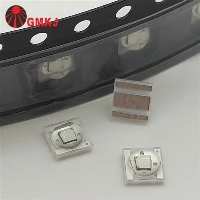
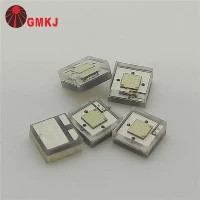


warm white 3000k smd led 3030

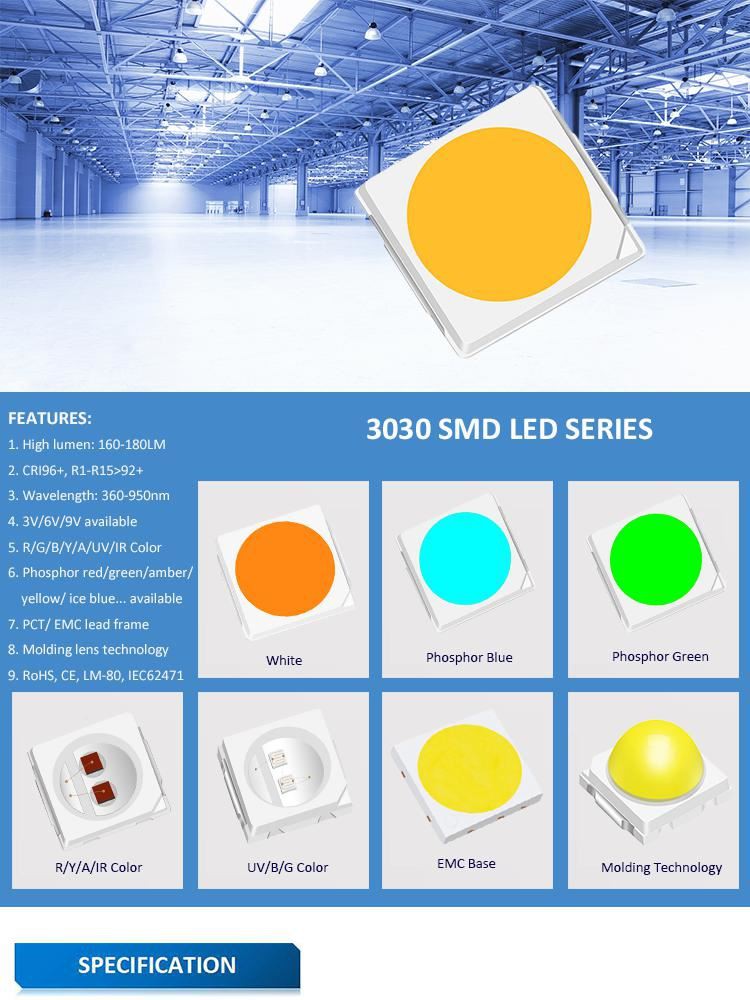
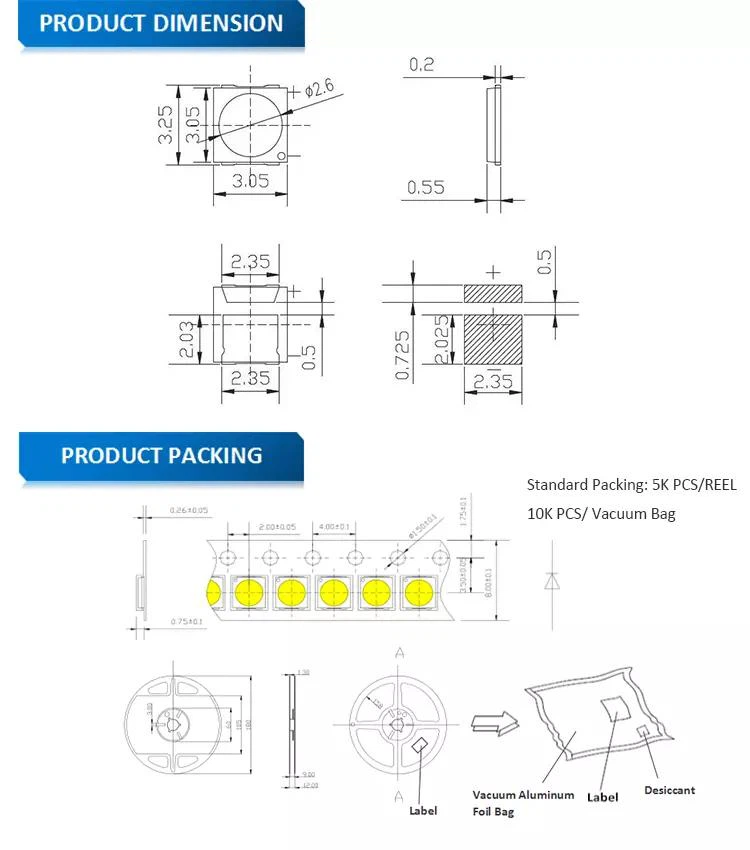
3030 SMD LED CHIP Specification
3030 SMD LED inside has 2 chips.
We have it with 2 chips in series with 6V 150mA.
We also have 2 chips in parallel packed with 3VDC 300mA.
The max brightness here can reach around 200LM with 3 chips inside with 3V 300mA packed.
For more details, please contact with us.
Product Name | 3030 SMD LED Chip 1W 160LM | Product Model | GS-3030 |
Power Dissipation | 1.05W | Color Rendering Index | 80 |
Forward Voltage | 3V /6V /9V | Viewing Angle | 120° |
Forward Current | 350mA /175mA /100mA | Operating Temperature | -40~+60 ℃ |
Luminous Flux | 140-150LM | Storage Temperature | -40~+85 ℃ |
Color Temperature | 4000-4500K | Soldering Temperature | 260℃ |
3030 Clear View

LED Specifications: light emitting diode parameters
When choosing LEDs it is necessary o understand the datasheet specifications so that the optimum LED part can be chosen for the particular application.
There is a huge variety of different LEDs that are available, each type with its own datasheet and specifications. Everything from the colour to the package, light output to the voltage drop and many more specification parameters.
This page will help unravel the meaning of the major LED datasheet specifications and help bring some clarity to understanding LED specifications.
LED colour
The colour of an LED is obviously of major importance when choosing an LED.
LEDS tend to provide what is effectively a single colour. In fact the light emission extends over a relatively narrow light spectrum.
The colour emitted by an LED is specified in terms of its peak wavelength (lpk) - i.e. the wavelength which has the peak light output. This is measured in nanometers (nm).
The colour of the LED, i.e. the peak wavelength of the emission from the LED governed mainly by the material used for the LED and also by the chip fabrication process. Variations in the process can tailor the peak wavelength variations up to figures of around ±10nm.
When choosing colours within the overall LED specification, it is worth remembering that the human eye is most sensitive to hue or colour variations around the yellow / orange area of the spectrum, i.e. between about 560 to 600 nm. Slight process variations could cause slight colour variations that could be noticeable if orange LEDs are chosen and sit next to each other on a front panel. This may affect the choice of colour, or position of LEDs if this could be a problem.
LED light intensity value, Iv
The LED specification for light intensity is important. The light intensity is governed by a variety of factors including the LED chip itself (including the design, individual wafer, the materials, etc.) , the current level, encapsulation and other factors.
The LED light intensity specification is not of crucial importance for most indicator applications, but with LEDs being used for lighting, this parameter is needed to be able to specify exactly what is needed in many situations.
The light output from an LED is quantified in terms a single point, on-axis luminous intensity value (Iv). This is specified as millicandella, mcd.
The lv measurement for LEDs cannot easily be compared with the values of mean spherical candle power, MSCP used for incandescent lamps.
The luminous intensity value for an LED must be quoted for a given current. Many LEDs will operate at currents of around 20mA, but the light output of an LED increases with increasing current.
LED current / voltage specification
LEDs are current driven devices and the level of light is a function of the current - increasing the current increases the light output. It is necessary to ensure that the maximum current rating is not exceeded. This could give rise to excessive heat dissipation within the LED chip itself which could result in reduced light output and reduced operating lifetime.
In operation, LEDs will have a given voltage drop across them which is dependent upon the material used. The voltage will also be slightly dependent upon the level of current, so the current will be stated for this.
Most LEDs require an external series current limiting resistor. Some LEDs may include a series resistor and will state the overall operating voltage.
LED reverse voltage
LEDs are not tolerant to large reverse voltages. They should never be run above their stated maximum reverse voltage, which is normally quite small. If they are then permanent destruction of the device will almost certainly result.
If there is any chance of a reverse voltage appearing across the LED, then it is always best to build in protection into the circuitry to prevent this. Normally simple diode circuits can be introduced and these will adequately protect any LED.
LED angle of view specification
In view of the way in which LEDs operate, the light is only emitted over a certain angle. While this LED specification may not be important for some applications, it is of great importance for others.
The angle of view is normally defined in degrees - °. For early devices, the angle of view was normally relatively small. More recent devices may have a much wider angle of view.
LED specification for operational life
The light intensity of a LED does diminish gradually with time. This means that a LED has an operational life.
This LED specification is of particular importance when a LED or LEDs are to be used for lighting applications. It is not normally as crucial when the LED is used as an indicator - here a catastrophic failure is of greater importance.
The LED specification for its operational life is generally defined in the following terms:
L50% = Time to 50% of illumination (lumen maintenance)
The standards state that during these times, the LED should not exhibit any major shifts in chromaticity.
The rationale behind these figures is that 70% lumen maintenance equates to a 30% reduction in light output. This is around the figure for the threshold for detecting gradual reductions in light output.
Where light output is not critical, the 50% lumen maintenance figure may be more applicable. However for applications where lights may be placed side by side any differences will be very noticeable and therefore an 80% lumen maintenance figure may be a more applicable specification.
Figures for LED operational life may be of the order of 50 000 hours or more dependent upon the lumen maintenance figure used. There is a belief that LEDs are not life’ed items, but especially where LEDs are used for lighting applications, the life of the components needs to be viewed very carefully.
These are some of the main LED specifications that are likely to be seen in the datasheets. Before choosing a particular LED it is necessary to look at all the parameters to make sure it is suitable, and allow a good margin for the spread of parameters within the specification.
Hot Tags: warm white 3000k smd led 3030, China, manufacturers, suppliers, factory, price, cheap, quotation, datasheet, specs, specification, led 3030 chip, 3030 epistar, led 2835 6v, ws2812b 5050 smd, Osram 3535 Led 1000mA, brightest smd led


