

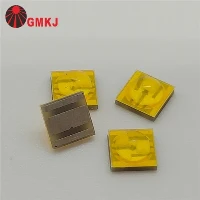


Products Description
3W 5W UV 365nm 395nm 5050 SMD LED Specs:
| Product name | 3W 5W UV 365nm 395nm 5050 SMD LED |
| Part number | GT-5050P400-1CC0-G1D5M |
| Chips brand |
3W with Taiwan Epileds 45mil chips; 5W with China Sanan 55mil chips; |
| Input |
3 Watt with 3vdc max 700mA; 5 Watt with 3vdc max 1500mA; |
| Optical Irridiance power |
3 Watt with 1000-1400mW |
| Warranty |
4-5 years long time fully guaranteed; Good quality from TOP 100 LED manufacturer in China |
| Color |
UVA available in below wavelength: 365-370nm; 380-390nm, 390-400nm; and 400-405nm |
| Power |
3 Watt and 5 Watt available |
| Ceramic package material |
ALN Ceramic package for 5 Watt; ALO Ceramic package for 3 Watt; |
| Lighting angle |
120 degree soft dome silicone lens |
| Brand and manufacturer | GMLEDs, GMKJ |
| Applications | UV curing, UV dryer, UV resin dryer, UV nail gel dryer |
| OEM service |
1. SKD parts available; 2. Aluminum pcb boards LED assembly service is also available here. |
What is the difference between ceramic substrated 5050 smd leds and 3535 smd leds?
The difference between ceramic substrate 5050 SMD LEDs and 3535 SMD LEDs primarily involves their size, power handling, thermal performance, and typical applications. Here's a breakdown:
1. Size:
5050 SMD LED: The number "5050" refers to the dimensions of the LED, which are 5.0 mm x 5.0 mm. It is larger than the 3535 LED.
3535 SMD LED: Similarly, the "3535" designation indicates the LED's size, which is 3.5 mm x 3.5 mm, making it smaller than the 5050 LED.
2. Power and Brightness:
5050 SMD LED: These LEDs typically handle higher power, producing higher brightness. They are commonly used in applications where bright, high-power lighting is required, such as in high-lumen lighting or decorative lighting strips.
3535 SMD LED: Being smaller, they usually handle less power compared to 5050 LEDs, but high-power versions of 3535 LEDs exist, especially in cases where ceramic substrates are used to enhance thermal performance and power handling. They can still produce very bright light, but they may be more focused due to their smaller size.

3. Substrate Material:
Ceramic substrate (5050): Using ceramic as the substrate provides better thermal management compared to standard plastic or epoxy-based substrates. This allows the LED to operate at higher currents and produce more light while dissipating heat effectively, which increases the LED's lifespan.
Standard 3535 SMD LED: Many 3535 LEDs come with a plastic or epoxy substrate, but there are also ceramic-substrated 3535 LEDs. A ceramic substrate on a 3535 LED would offer similar thermal benefits as in 5050s, enhancing heat dissipation and enabling higher power handling.
4. Applications:
5050 SMD LEDs: These are widely used in high-power applications, such as RGB lighting, general-purpose illumination, backlighting, or situations where high brightness and wider light distribution are needed.
3535 SMD LEDs: These LEDs are used in more focused applications like flashlights, automotive lighting, and architectural lighting. Their compact size makes them suitable for installations requiring precision and high efficiency in small spaces.
5. Thermal Performance:
5050 with Ceramic Substrate: The ceramic substrate helps manage the heat generated from higher power output, allowing the LED to run cooler for longer periods.
3535 SMD LED: In a ceramic version, the thermal performance would be improved, but a standard 3535 LED may have slightly less efficient heat dissipation due to the smaller size and different material choices.
6. Efficiency:
5050 SMD LEDs: Often more efficient for general and ambient lighting because of their ability to produce a wider beam angle.
3535 SMD LEDs: Can be more efficient in directional lighting applications due to their compact design and higher intensity per unit area.
In summary, ceramic-substrate 5050 SMD LEDs are larger, typically brighter, and better suited for high-power applications with superior heat management, while 3535 SMD LEDs are smaller, more compact, and better suited for focused or smaller-space applications, although ceramic versions can enhance their power and thermal management as well.
3W 5W UV 365nm 395nm 5050 SMD LED product picture:


3W 5W UV 365nm 395nm 5050 SMD LED dimensions:

3W 5W UV 365nm 395nm 5050 SMD LED Eletrical specs:
■ Electrical/Optical Characteristics- (At TA=25°C)
|
Parameter |
Symbol |
Conditions |
Min |
Avg. |
Max |
Units |
|
Forward Voltage |
VF |
IF=700mA |
3.20 |
-- |
3.80 |
V |
|
Thermal Resistance Junction To Board |
RΘJ-B |
IF=700mA |
-- |
6.5 |
-- |
°C/W |
|
Radiant Flux |
Φe |
IF=700mA |
1000 |
1200 |
mW |
|
|
Peak wavelength |
λp |
IF=700mA |
400 |
405 |
nm |
|
|
Temperature Coefficient of Forward Voltage |
∆VF/∆T |
IF=700mA |
−− |
-2 |
−− |
mV/°C |
|
Reverse Current |
IR |
VR=5V |
−− |
−− |
10 |
μ A |
|
Viewing Angle |
2Θ1/2 |
IF=700mA |
−− |
120 |
−− |
Deg |
Application
3W 5W UV 365nm 395nm 5050 SMD LED applications
3W 5W UV 365nm 395nm 5050 SMD LED is mainly used for UV curing, UV resin dryer, UV nail gel dryer, UV printing offset curing, UV pcb boards dryer, money identifier and other applications.


About GMLEDs
Certification available in GMLEDs
Guangmai Technology Certificaitions
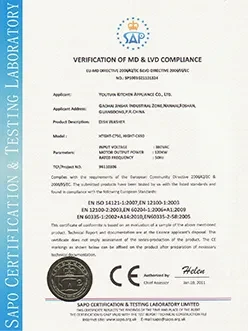
CE
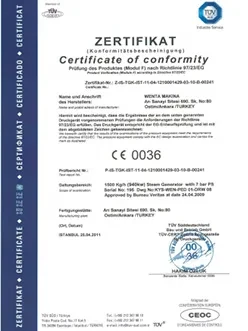
CE-LVD
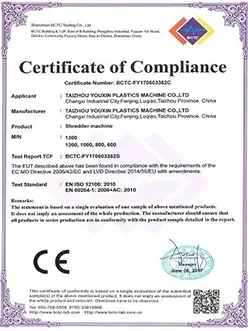
FCC
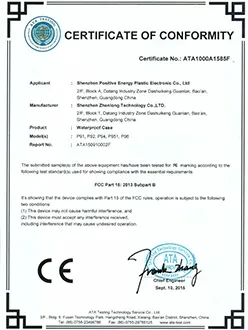
ROHS

ISO9001

LM-80

Guangmai Electronics' products are renowned for their outstanding quality and are widely used in various fields such as new energy, 3D printing, ink drying, automation equipment, low-altitude drones, security surveillance, beauty and medical care, disinfection and sterilization, plant supplementary lighting, landscape lighting, and general illumination. The products are exported to more than 50 countries and regions worldwide, earning widespread praise and the trust of customers in the international market.
For more details, please contact with us directly!
Hot Tags: 3w 5w uv 365nm 395nm 5050 smd led, China, manufacturers, suppliers, factory, price, cheap, quotation, datasheet, specs, specification


