

Why do LEDs get hot when working?
There are three main series of high-power LEDs. The first type is the most commonly used high-power lamp beads that imitate lumens, but the most inconvenient part of this kind of lamp beads is that they can only be pasted by hand and cannot be mounted on a placement machine. It cannot pass through the reflow oven, so it can only be soldered manually or on the heating table. The second is Cree's SMD series. The lamp beads are small and the SMD is very convenient. However, because of its small size, the heat generation of the chip is required to be small. Chip requirements are high.
Mainly, Cree is doing (or using Cree's chips), and the price is relatively high. The third one is Samsung's 5630 (5730), which is between high power and low power, generally only 0.5W can be used , it is more convenient for patch, but it is not convenient to use lens, so many lamps with opaque cover use it, and another one is integrated lamp beads, which depends on the number and size of chips.
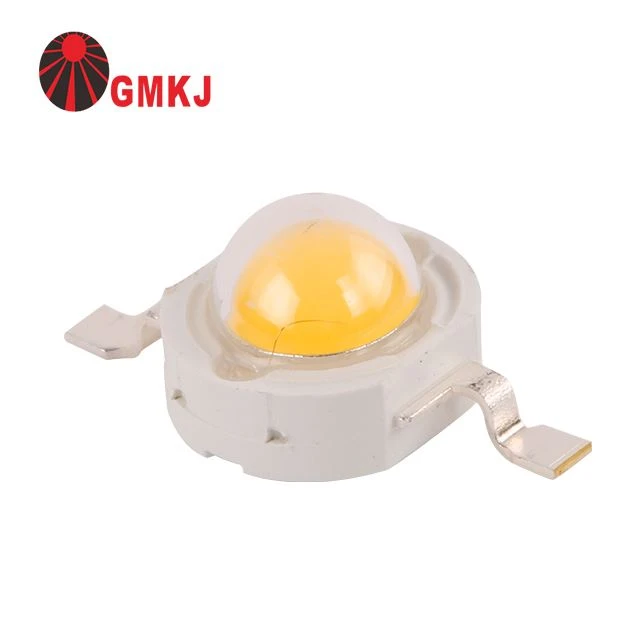
High Power LED
High-power LED work fever reasons:
Under the forward voltage of LED, the electrons obtain energy from the electric source. Driven by the electric field, they overcome the electric field of the PN junction and transition from the N region to the P region. These electrons recombine with the holes in the P region. Since the free electrons drifting to the P region have higher energy than the valence electrons in the P region, the electrons return to a low-energy state during recombination, and the excess energy is released in the form of photons.
On the way inside the diode, electrons will consume power due to the existence of resistance. The power consumed conforms to the basic laws of electronics: P = I2 R = I2 (RN ++RP ) + IVTH where: RN is the bulk resistance of the N region VTH is the turn-on voltage of the PN junction RP is the heat generated by the power consumed by the bulk resistance of the P region For: Q = Pt where: t is the time when the diode is energized.
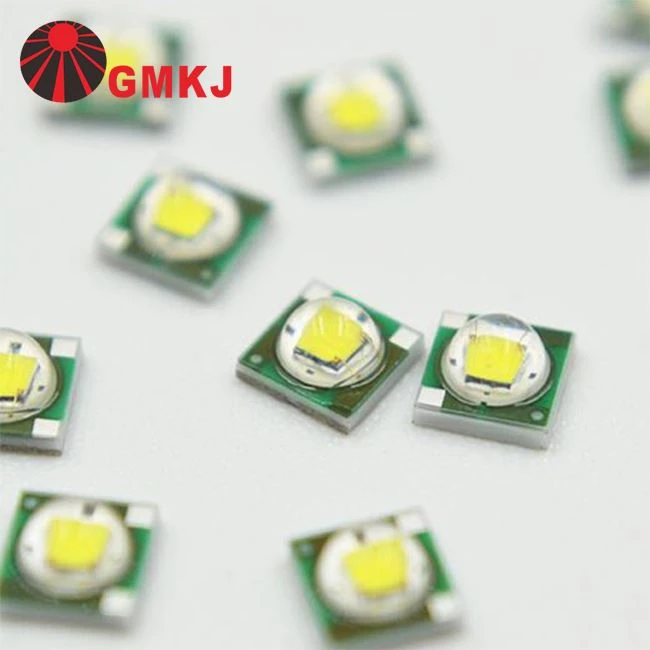
In essence, the LED is still a semiconductor diode. Therefore, when the LED is working in the forward direction, its working process conforms to the above description. The electric power it consumes is: P LED = U LED × I LED In the formula: U LED is the forward voltage across the LED light source I LED is the current flowing through the LED, and the consumed electric power is converted into heat and released: Q= P LED × t where: t is the power-on time.
In fact, the energy released by electrons when they recombine with holes in the P region is not directly provided by the external power source, but because the electrons in the N region have a higher energy level than the P region in the absence of an external electric field. The valence electron energy level is higher than Eg. When it reaches the P region and recombines with the hole to become the valence electron of the P region, it will release so much energy. The size of Eg is determined by the material itself and has nothing to do with the external electric field. The effect of the external power source on the electron is only to push it to move in a directional manner and overcome the effect of the PN junction.


