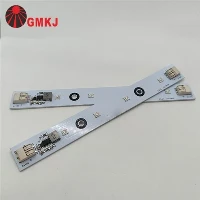
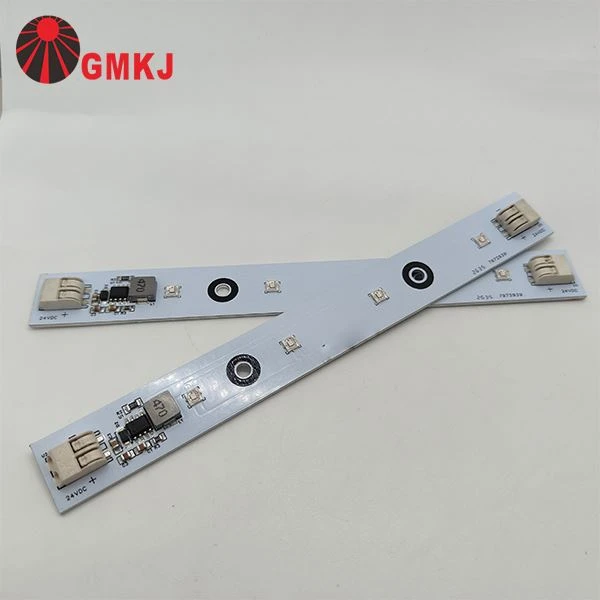

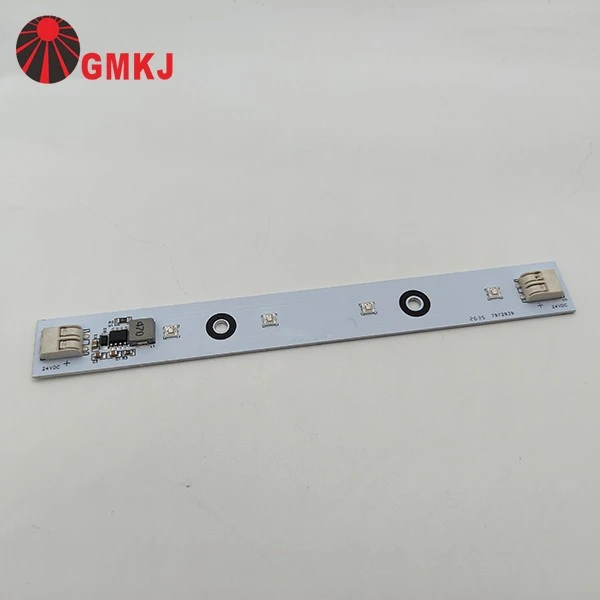
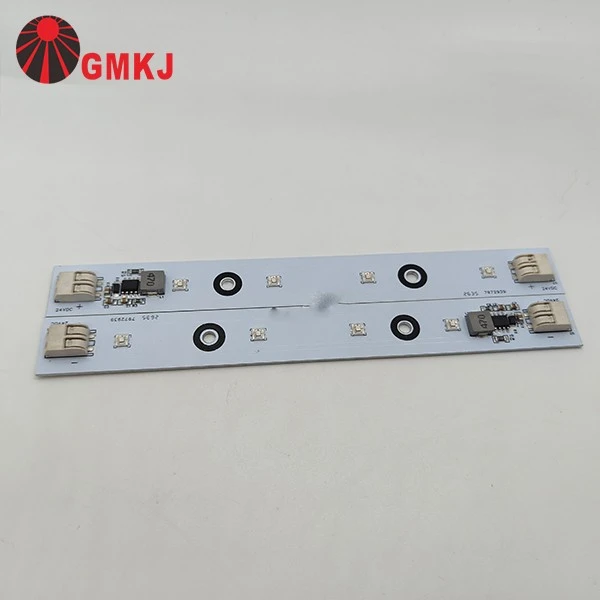
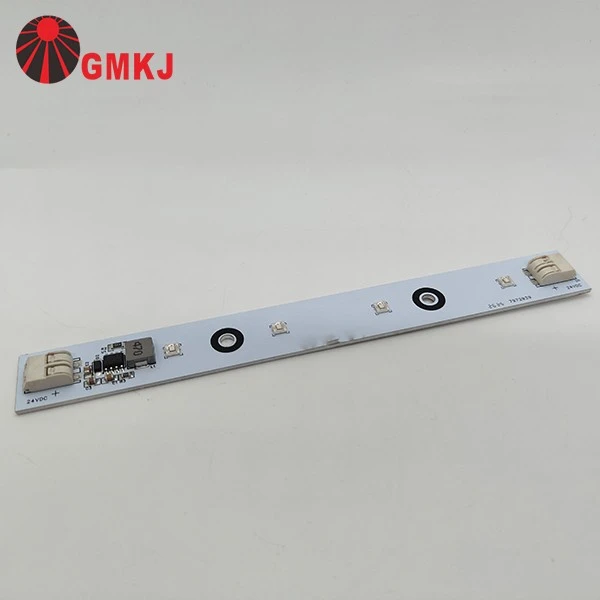
12V 24V 365nm UV LED Board for Photocatalytic Air Purifier Specs
| Product name | 12V 24V 365nm UV LED Board for Photocatalytic Air Purifier |
| Part number |
12VDC voltage constant input part number: GM-10P365-15618-12V 24VDC voltage constant input part number: GM-10P365-15618-24V |
| Chips brand |
Taiwan Epileds chips with zener diode packed inside for high ESD protectiion High radiation power with big size chips inside |
| Manufacturer brand on Label |
GMKJ Brand Manufactured by Guangmai Technology Co., Ltd, located in Shenzhen city, China |
| Input |
12vdc voltage constant 24vdc voltage constant selectable
We have integrated the current constant IC and capactiors on boards. The led current has been set with around 600-650mA current cosntant for longer lifespan. |
| Luminous/ Radiant Flux |
4000-5000mW with 4 pcs UV 3535 smd led 365nm |
| Lighting Efficiency |
NO LM/W recorded, because those uv leds has low luminous intensity |
| Wavelength/Color |
365-370nm, specilized in Photocatalytic Air Purifier |
| Power |
Max 10W, usually set with around 9 Watt for longer lifespan Current value can be customized here. |
| Package material |
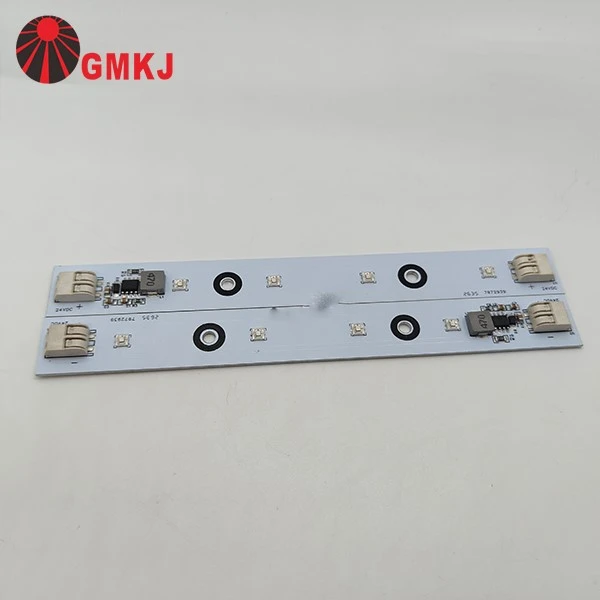
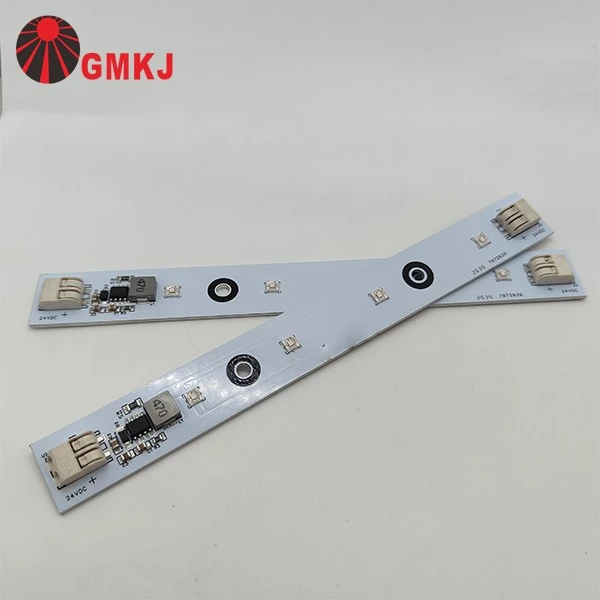
Aluminum board with thickness 2.0mm Board size: 156x18mm x2mm thickness |
| Lighting angle |
120 degree lighting angle with dome silicone lens
Wire connector type: 2 pcs Wago 2060 wire connector soldered on boards You can just insert the wire easily into the wire connector and use the led board fast!
|
| Price | Please contact with GMKJ Sales team for the Price |
| Warranty |
3-4 years 100% tested all the boards before shipment with exact current value set! |
| OEM service |
1. SKD parts available; 2. Customised LED board with the board size/LED qty/input voltage you need can be supported |
12V 24V 365nm UV LED Board for Photocatalytic Air Purifier picture
12V 24V 365nm UV LED Board for Photocatalytic Air Purifier Dimension

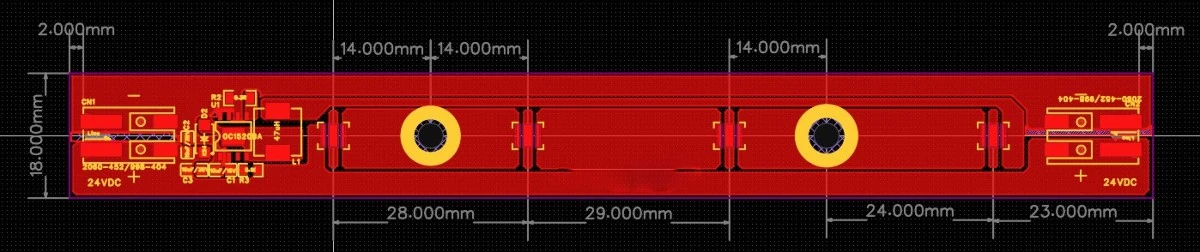
Aluminum board with thickness 2.0mm
Board size: 156x18mm x2mm thickness
365nm single LED Test report, every LED gets tested before shipment!

Why 365nm uv is the most effective wavelength for Photocatalytic Air Purifier ?
Why 365nm UVA LED Is Widely Used in Photocatalytic Air Purifiers
Photocatalytic air purification is becoming an interesting solution for removing formaldehyde, VOCs and other organic pollutants from indoor air. In many photocatalytic air purifier designs, 365nm UVA LEDs are used as the light source to activate the photocatalyst.
But why 365nm? Why not 395nm, or even a shorter UVC wavelength?
The answer is not simply that shorter wavelengths have more energy. The performance of a photocatalytic system depends on the relationship between the UV wavelength, photocatalyst, optical power, catalyst surface and overall reactor design.
1. 365nm Provides Enough Energy to Activate TiO₂
Titanium dioxide (TiO₂) is one of the most widely used photocatalytic materials.
When TiO₂ is exposed to suitable UV light, photons can excite electrons from the valence band to the conduction band. This creates electron-hole pairs that can participate in surface reactions.
A 365nm photon has an energy of approximately 3.40eV, which is sufficient to activate conventional TiO₂ photocatalysts.
In simple terms:
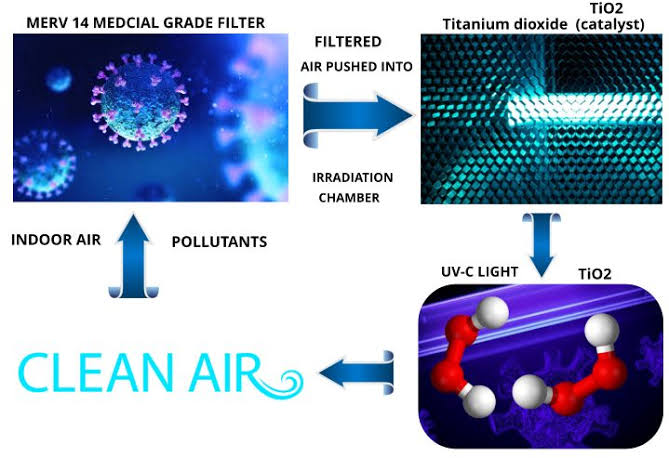
365nm UVA → TiO₂ activation → electron-hole pairs → reactive oxygen species → pollutant degradation
This is the basic mechanism behind TiO₂-based photocatalytic air purification.
2. Why 365nm Instead of 395nm?
395nm UVA LEDs are also commonly available and are often less expensive. However, 365nm provides higher photon energy.
The photon energy can be estimated from:
E = 1240 / λ
Therefore:
365nm ≈ 3.40eV
385nm ≈ 3.22eV
395nm ≈ 3.14eV
As the wavelength becomes longer, photon energy decreases.
Depending on the photocatalyst being used, moving too far toward the long-wavelength side can reduce the efficiency of photocatalyst excitation. This is one reason why 365nm is frequently selected when TiO₂ is the main photocatalytic material.
However, this does not mean that 365nm is automatically the best wavelength for every photocatalytic coating. The absorption characteristics of the actual catalyst should always be considered.
3. What Happens After TiO₂ Is Activated?
After absorbing UV photons, TiO₂ generates electrons and holes.
These charge carriers can react with oxygen and water on the catalyst surface and form reactive oxygen species, including hydroxyl radicals and superoxide-related species.
These highly reactive species can attack organic pollutants adsorbed on the catalyst surface.
For example, formaldehyde can be gradually oxidized through intermediate compounds and ultimately converted mainly into carbon dioxide and water under suitable conditions.
This is why photocatalytic air purification is different from simply trapping pollutants with a filter.
A conventional filter mainly captures particles or adsorbs certain gases. A photocatalytic system is designed to promote chemical reactions that break down organic pollutants.
4. UVA and UVC Have Different Jobs
One common misunderstanding is that UVC should always be better because it has higher photon energy.
In an air purifier, however, UVA photocatalysis and UVC sterilization can serve different purposes.
365nm UVA is commonly used to activate the photocatalyst.
UVC around 265–280nm is commonly used for direct microbial inactivation.
UVC can damage the DNA or RNA of microorganisms, while UVA can provide the energy needed for photocatalytic reactions on a TiO₂ surface.
For this reason, combining UVA and UVC can be attractive in some air purification designs.
The two wavelengths do not necessarily compete with each other. They can perform different functions within the same system.
5. Optical Power Is Just as Important as Wavelength
Choosing the correct wavelength is only the first step.
In practical product development, the available optical power reaching the photocatalyst is also very important.
A 365nm LED with insufficient optical power may not provide enough photons to achieve the desired reaction rate. On the other hand, simply increasing LED power does not guarantee a proportional improvement in purification performance.
The actual result depends on several factors:
UV irradiance on the catalyst
LED optical efficiency
distance between LED and catalyst
catalyst coating thickness
catalyst surface area
air flow rate
pollutant concentration
reactor structure
temperature and humidity
This is why an effective photocatalytic air purifier needs to be designed as a complete system rather than simply selecting a high-power UV LED.
6. Why 365nm UVA LEDs Are Attractive for LED-Based Systems
From an LED engineering perspective, 365nm is also a practical wavelength for compact photocatalytic equipment.
Compared with conventional UV lamps, UV LEDs can offer several advantages:
compact size
instant start-up
good controllability
low mercury-related environmental concerns
easy electronic dimming and control
flexible mechanical design
long operating life when properly cooled
For air purifier manufacturers, this makes UVA LEDs easier to integrate into compact modules and customized optical structures.
The LED package is also important. UV LEDs used inside air purification equipment may operate continuously for long periods, so thermal management, optical output stability and package reliability should not be overlooked.
7. 365nm Is Not a Universal Answer
It is important not to treat 365nm as a universal optimum.
Different photocatalysts have different spectral responses. Modified TiO₂, doped photocatalysts and other semiconductor materials may respond differently to UV wavelengths.
Therefore, when developing a new photocatalytic air purifier, the better approach is to test the actual combination of:
UV wavelength + optical power + photocatalyst + airflow + reactor design
rather than selecting a wavelength based only on theoretical photon energy.
For TiO₂-based photocatalytic systems, however, 365nm UVA remains a widely used and practical choice because it provides sufficient photon energy while working well with common UV LED technology.
Conclusion
The reason 365nm UVA LEDs are widely used in photocatalytic air purifiers is not simply because they are "stronger" than longer-wavelength UV LEDs.
The key is the match between the 365nm spectrum and the photocatalyst's photoactivation characteristics.
When the right wavelength is combined with sufficient optical irradiance, an appropriate photocatalytic coating and a well-designed airflow path, the UV LED can help generate reactive oxygen species that contribute to the degradation of formaldehyde and other organic pollutants.
For this reason, 365nm UVA is often a practical starting point for TiO₂-based photocatalytic air purification, while UVC can be added when direct microbial inactivation is also required.
For LED manufacturers and air purifier developers, the most important question is therefore not simply "Which UV wavelength is strongest?", but rather:
"Which wavelength, optical power and photocatalyst combination gives the best overall performance in the actual air purification system?"
About GMKJ
Guangmai Technology is a professional LED manufacturer established in 2009, specializing in LED packaging and custom LED solutions.
Our main products include SMD LEDs, High Power LEDs, COB LEDs, UV LEDs, IR LEDs, VCSELs, and ceramic substrate LEDs. We offer wavelengths from 200nm to 3000nm for applications such as horticulture lighting, medical devices, industrial curing, machine vision, security, and scientific research.
With advanced production equipment, strict quality control, and experienced engineering support, we provide reliable products and customized solutions to customers in more than 50 countries worldwide.
We are committed to delivering high-quality LED products, competitive pricing, and professional service to our global partners.


You can download the datasheet from this page for related SMD LEDs.
If you need more details like price, min order quantity, stock status and lead time, please contact with GMKJ LEDs directly!
We are always here for you!
Hot Tags: 12v 24v 365nm uv led board for photocatalytic air purifier, China, manufacturers, suppliers, factory, price, cheap, quotation, datasheet, specs, specification