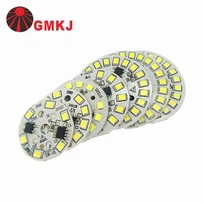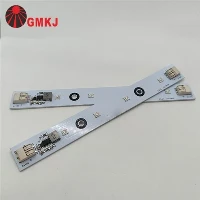
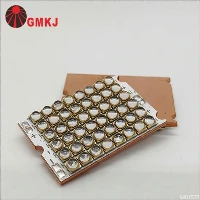


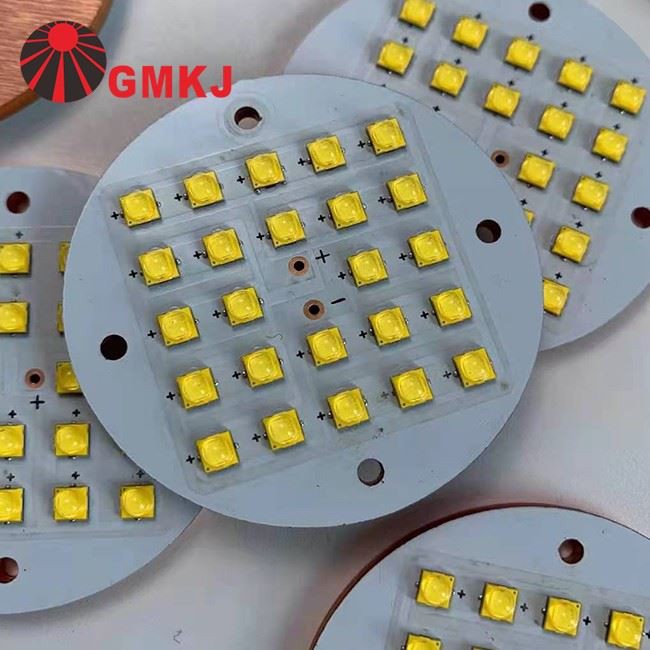


Guangmai Technology is professional in making the Wago Wire connector Soldering Welding onto LED PCB Boards service.
Precautions for preventing vulcanization in the SMT production process of LED application products
Precautions for preventing vulcanization in the SMT production process of LED application products
In the SMT production process of LED application products, vulcanization is most likely to occur in the reflow soldering process. From the various bad cases that have occurred, Jin Jian shows that the stent silver screen is vulcanized strongly, and the speed is directly related to the sulfur content, temperature, and time. The reflow process is a typical high-temperature and high-humidity environment, and a large amount of sulfur-containing materials may also be encountered. During the inspection process of GMKJ LED, it was found that there were records of sulfur elements in the solder paste washing water and other filling glues of PCB boards. During the SMT operation, these materials will be reflowed together with the LED. After reflowing for a period of time, the silver-plated part of the bracket will undergo internalization. The main reason is that sulfur-containing substances penetrate into the LED during the reflow process, causing the silver to be Vulcanization, leading to product failure.
For example, from the analysis of the composition of MCPCB sheets in many cases of GMKJ LED in the past, many sheets produced on the market have different levels of residual sulfur, although MCPCB manufacturers will clean the sheets during the process to eliminate the content. Sulfur and acid-containing chemical solvents remain, but it is difficult to completely eliminate them in ordinary production processes. In view of the fact that sulfur is more active in high-temperature environments when SMT operations, the MCPCB board can be pre-processed through a high-temperature reflow oven (about 230 degrees) before surface cleaning (medical alcohol, etc.) before surface mounting to reduce MCPCB soldering Sulfur content of the disc and surface layer. If the process is not allowed, the PCB surface can be cleaned directly before SMT, and the product surface should be cleaned once after the reflow is completed. The board surface and solder joints are cleaned to reduce the probability of LED vulcanization. When cleaning, you need to choose not to make sulfur and not Containing other acidic cleaning Liu

Pay special attention to solder paste here. Solder paste is a complex system, which is a mixture of solder powder, flux and other additives. The solvent and some additives of the solder paste will volatilize under the high temperature of soldering, and these solvents will penetrate through the gaps of the LED lamp beads or the pores of the silica gel. The flux composition in the solder paste is more complicated. The activator composition usually contains a few halogen or organic acid components. It can quickly eliminate the oxide film on the surface of the soldered metal, reduce the surface tension of the solder, and make the solder spread quickly on the soldered metal. surface. The halogens usually used are chlorine and bromine. The presence of chlorine and bromine can easily cause chlorination, bromination and chemical incompatibility of the lamp beads.
Therefore, GMKJ LED recommends that LED lighting factories conduct regular incoming inspections on PCB boards, materials, and other supporting auxiliary materials to avoid sulfur-containing substances remaining on the PCB boards. After the PCB reflow connection is completed, the solder joint position is cleaned to eliminate or reduce surface residues. Avoid using acidic sulfur-containing adhesives and solvents for cleaning agents.
In addition, during the SMT operation, it is necessary to prevent the use of sulfur-containing materials to cause vulcanization of the LED. For example, please do not use sulfur or halogen-containing accessories such as rubber gloves, rubber finger cots, rubber bands, rubber anti-static tablecloths, fillers, glass glue, hot melt glue, etc. to contact the LED during the soldering and handling of the LED. ; It is also necessary to prevent the use of vulcanized fixtures and machines; it is best to establish a separate sulfur-free SMT production line or production workshop to ensure that the products are not vulcanized during the process of making LED products SMT: regularly clean the reflow furnace and Dehumidification oven: and control the workshop environment of LED or LED components during welding, processing and application, which is beneficial to reduce or even eliminate the risk of sulfur or halogen harm to LED.
Product Picture: LED pcb boards are passing the reflow oven after SMT

What GMKJ LED can do now:
 |  |  |
| Wire soldering and LED & resistors soldering onto the pcb boards | wago wire connectors soldering and assembly | Aluminum pcb boards gerber file and Altium design drawing design |
GMKJ LED is proffesional in making the LED chips:
LED lighting on effect after soldering, we will check 100% before shipment.
 |  |
| Plant LED growth pcb boards 100% lighting on check before shipment | UV LED Lighting on effect checking before shipment |
About Guangmai


More information:
For more details of the Wago Wire connector Soldering Welding onto LED PCB Boards service , please feel free to contact with Guangmai Tech directly.
Hot Tags: wago wire connector soldering welding onto led pcb boards service, China, manufacturers, suppliers, factory, price, cheap, quotation, datasheet, specs, specification, lighting pcb, led matrix pcb, dob mcpcb, led tube light circuit pcb, LED pcb, led light circuit board