


Recently, the research team of Li Dabing and Sun Xiaojuan of Changchun Institute of Optics, Fine Mechanics and Physics, Chinese Academy of Sciences, and Xu Ke's research team of the State Key Laboratory of Virology of Wuhan University carried out stress engineering, device preparation and device preparation of epitaxial AlGaN-based deep ultraviolet LEDs on strong compressive stress AlN/sapphire template substrates, as well as the research on the sanitizing efficiency of human respiratory RNA viruses. AlGaN-based deep ultraviolet LEDs with different peak wavelengths of 256 nm, 265 nm and 278 nm were prepared, which had excellent sanitizing effect on human respiratory RNA viruses.
Background:
Human respiratory RNA viruses, such as SARS-CoV-2 and influenza A (IAV), cause significant morbidity, mortality, economic loss, and pandemic disease worldwide. Therefore, there is a need to develop more efficient and broad-spectrum surface and environmental disinfection methods to reduce the risk of human respiratory RNA virus transmission.
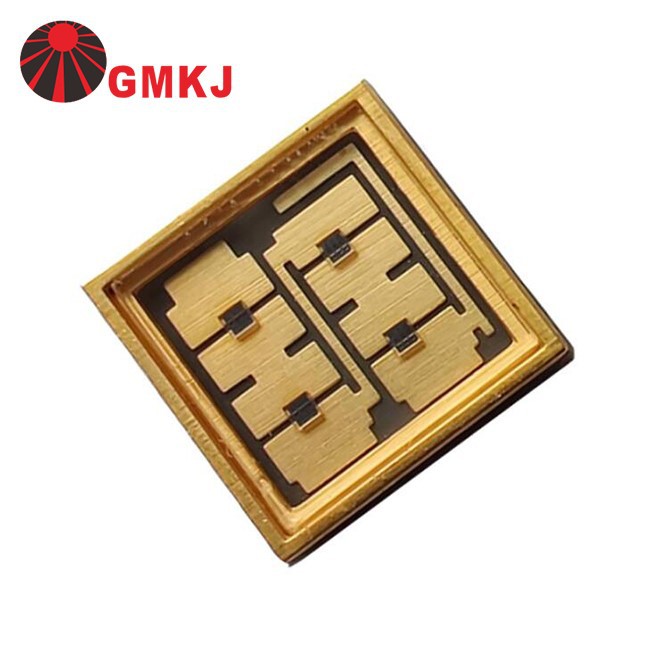
Deep ultraviolet light is an effective way to inactivate viruses by disrupting their genomes. Mercury lamps are commonly used to sanitize viruses, but have the disadvantages of toxicity, brittleness, bulkiness, short lifespan and ozone generation. Under the Minamata Convention, the production, import and export of mercury-containing products are prohibited from 2020. There is an urgent need for an environmentally friendly and efficient sanitizing product. AlGaN deep UV LEDs can be tuned from 365 nm to 210 nm and are an alternative to mercury lamp sterilization due to their non-pollution, small size, and energy saving, as shown in Figure 1.
Studies have shown that AlGaN-based deep ultraviolet LEDs can effectively inactivate bacteria such as Escherichia coli, Staphylococcus aureus, and Candida albicans, and different bacteria have different sensitivities to different wavelengths. The wavelength below 260 nm has a good inactivation effect on bacteria. However, the research on the sanitizing effect of AlGaN-based LEDs on SAR-CoV-2 and IAV is usually focused on 265~365 nm, and has an integrated light source mode and low virus concentration. The inactivation of SARS-CoV-2 and IAV by more portable, shorter-wavelength AlGaN-based deep UV LEDs must be more accurately estimated.
AlGaN-based deep UV LEDs are typically heteroepitaxial on AlN/sapphire templates. Over the past two decades, high-quality AlN/sapphire templates have been obtained through a variety of methods, among which the high-temperature annealing method is perhaps the most promising industrial application due to its simplicity, efficiency, and stability. However, high-temperature hot-annealed AlN/sapphire templates usually exhibit strong compressive stresses, which can significantly affect the quality of the upper AlGaN.
On the one hand, strong compressive stress can induce the S-K growth pattern, resulting in a three-dimensional island structure that produces high-density thread dislocations and rough surfaces. On the other hand, strong compressive stress can cause a traction effect, resulting in inhomogeneous composition and low doping efficiency. In addition, strong compressive stresses are likely to degrade the device during the manufacturing process. Therefore, the relaxation of the strong compressive stress is necessary for epitaxial devices on the strong compressive stress AlN/sapphire template.
Research Highlights:
In response to the above problems, the research team of Li Dabing and Sun Xiaojuan of Changchun Institute of Optics, Fine Mechanics and Physics, Chinese Academy of Sciences, and Xu Ke's research team of the State Key Laboratory of Virology of Wuhan University carried out stress engineering, device preparation and device preparation of epitaxial AlGaN-based deep ultraviolet LEDs on strong compressive stress AlN/sapphire template substrates, as well as the research on the efficiency of devices in sanitizing human respiratory RNA viruses.
It is found that by inserting a superlattice structure between the strongly compressive stress AlN/sapphire substrate and the AlGaN epitaxial layer, the strong compressive stress of the substrate on the epitaxial layer can be effectively alleviated, and the dislocation density of the AlGaN epitaxial layer is reduced by more than an order of magnitude compared with the direct epitaxial method, and the surface has atomic-level flattening, which can significantly improve the interface quality of epitaxial LED.
Based on this method, the research team fabricated AlGaN-based deep ultraviolet LEDs with different peak wavelengths of 256 nm, 265 nm, and 278 nm, corresponding to optical powers of 6.8 mW, 9.6 mW, and 12.5 mW at 100 mA.
At the same time, the research team studied the sanitizing effect of different wavelengths on human respiratory RNA viruses SARS-CoV-2, IAV and human parainfluenza virus (HPIV) at the same optical power density (0.8 mW/cm2). The results showed that all wavelength LEDs sanitize 100% SARS-CoV-2 and IAV within 60 seconds at a virus concentration of 3.8×10⁵ PFU/mL. Among them, 256 nm-LEDs can sanitize 100% SARS-CoV-2 and IAV in 10 seconds, showing higher sanitize efficiency than long-wavelength LEDs.
In addition, at higher virus concentrations and different virus attachment surfaces, 256 nm-LEDs also showed excellent sanitizing effects. These results will help deep UV LEDs to disinfect viruses in a more portable, environmentally friendly, broad-spectrum, and efficient way.

Fig.1 Working wavelength and structure of AlGaN-based deep ultraviolet LED and its application in the field of sanitizing
The work is based on the theme "Rapid inactivation of human respiratory RNA viruses by deep ultraviolet irradiation from light-emitting diodes on a high-temperature-annealed AlN/Sapphire template" This title was published in Opto-Electronic Advances, Issue 9, 2023.


