

LED CHIP tips for downlights & panel lights
Downlight The three main components of panel lights: housing, lamp beads, and driver.
Lamp beads
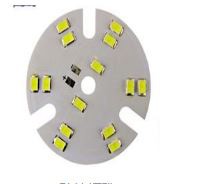
1. Lamp beads are divided into SMD lamp beads, COB lamp beads, high-power lamp beads, and integrated (collective term for fixed COB) lamp beads;
Integrated lamp beads are generally used for lamps with higher power, such as flood lights and street lamps, and integrated lamp beads are generally used.
2. Detailed classification of lamp beads:
1) SMD lamp beads (SMD=surface mounted device) are classified according to their size: SMD2835, SMD5730, SMD5050, etc., among which SMD2835 means that the lamp bead is 2.8mm in length and 3.5mm in width, and the others are the same;
SMD2835, generally single chip 0.2W, 0.5W, 1W; SMD5730, generally single chip 0.5W.
2) COB lamp beads (Chip On Board), according to the light-emitting surface classification: 11MM, 17MM, 21MM; the size of which is 11MM, which represents the size of COB lamp beads, and the others are the same.
Available wattage: 3W/piece, 5W/piece...40W/piece, 50W/piece.

3) High-power lamp beads, also called imitation lumen lamp beads.

3. Panel lights are divided into SMD panel lights and COB panel lights according to the lamp bead type; according to the shape, they are divided into round panel lights and square panel lights; the light-emitting type is divided into bottom emitting and side emitting.
4. COB lamp beads can use the light guide to increase the central light intensity, so as to achieve the effect of condensing light, but the light-emitting angle cannot be changed. The reflector determines the light-emitting angle of the lamp. Be very careful about the temperature of lamps with light guides. Many light guides do not properly dissipate heat and burn chips after a long time, which leads to a certain degree of light leakage and light loss.
5. Some COB downlights with light guide rods will have a yellow halo when in use, which will affect the lighting effect of the lamp.
6. Parameters related to lamp beads include: luminous efficiency, luminous flux, luminous intensity, illuminance, color rendering, color temperature, glare.
1). Luminous Efficiency, unit: Lm/w.
2). Luminous Flux, unit: Lm.
3). Light intensity, unit: cd.
4). Light illuminance, unit: lx.
5). Color rendering CRI=Color rendering index, unit: Ra.
6). Color temperature CCT=Color Temperature, unit: K.

It can be divided into: warm light (2700K-3200K), neutral light (4000-4500K), cold light (6000-6500K). The following are the color temperatures under different light source environments.
7). Glare Dazzle
Glare refers to the visual conditions that cause visual discomfort and reduce the visibility of objects due to inappropriate brightness distribution or extreme brightness contrast in space or time in the visual field. There is a sense of light in the field of vision that the human eye cannot adapt, which may cause disgust, discomfort or even loss of clarity. In a certain place in the field of view, there is too high brightness or too big brightness changes before and after. Glare is one of the important causes of visual fatigue.


