

According to the National Development and Reform Commission’s "Announcement on the Phase-out Ban on Import and Sale of General Lighting Incandescent Lamps", starting from October 1, 2012, the import and sale of general lighting incandescent lamps will be gradually banned according to the power level. It is expected that incandescent lamps will be completely eliminated by 2016. At the same time, the government will increase efforts to promote the popularization and application of energy-saving lamps and LED lighting. ——Energy-saving lamps have undoubtedly become a benchmark that must be surpassed in LED lighting applications on the way forward.
Who is more energy efficient?
CFL compact fluorescent lamps only consume 1/5 to 1/4 of the electricity consumption of ordinary incandescent lamps under the premise of achieving the same light energy output, which can save a lot of lighting power and costs, so it is usually called energy saving. light. China’s energy-saving lamp promotion strategy has a long history. Starting from the introduction of more than 60 million energy-saving lamps in my country’s first batch of high-efficiency lighting products with financial subsidies in 2008, the market share of energy-saving lamps in the overall lighting market has reached about 55%. , my country has become a major exporter of energy-saving lamps, and 70% of the energy-saving lamps produced in China are sold to overseas markets every year.
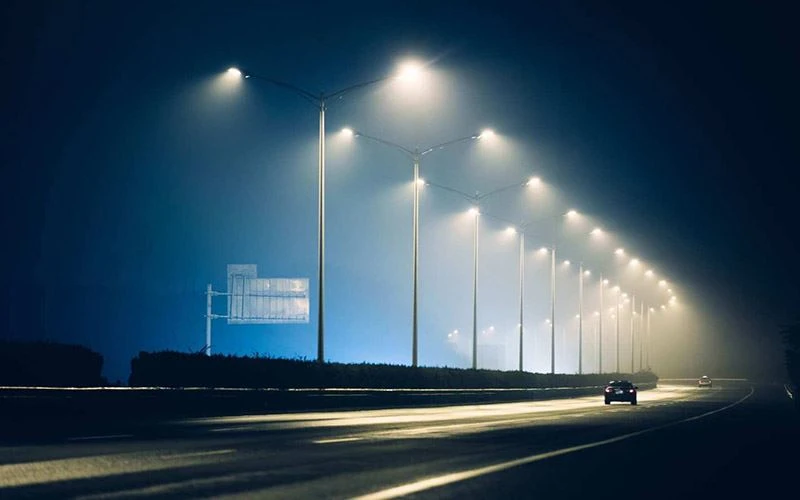
LED is a solid-state semiconductor device that can directly convert electricity into light. It only needs to consume one third of the energy of its predecessor incandescent lamp to achieve the same light effect. It can also use smart sensors and microcontrollers. , Which greatly improves equipment maintenance efficiency and reduces management costs, which truly brings additional energy-saving effects and economic benefits.
Who has a longer lifespan?
According to the relevant national energy-saving lamp quality standards, the average light life of a high-quality energy-saving lamp should reach 6000 hours. Some brand companies have stricter requirements on light life. For example, the new spiral energy-saving lamps they are currently developing can achieve 10,000 hours of light life (about 1 year), and after 10,000 hours of use, the brightness of the light is only reduced by 30%.
The theoretical service life of LED lights produced by regular manufacturers is generally about 80,000 hours (about 9 years). Data shows that high-quality LEDs can maintain more than 60% of the initial light brightness after 50,000 hours of continuous operation. There are often manufacturers who say that the life of LED lights can reach 100,000 hours. In fact, this is only the half-life (time at which light decays by half) in the laboratory under constant temperature, constant humidity, and constant current conditions, and not all LEDs have a long lifespan. , And it is unlikely that it will not be damaged. The finished LED product must go through a MOCVO (metal organic chemical vapor deposition process) to grow epitaxial wafers, and then go through a series of processes such as thinning, segmentation, die bonding, wire bonding, package baking, inspection, and color separation. Determine the length of the LED life. More importantly, the life of the driving power supply and the reduction of the heat generated by the LED chip as much as possible are important factors that affect the life of the LED lighting.
Who is more environmentally friendly?
One of the most criticized energy-saving lamps is the pollution to the environment. Due to the working principle, mercury in the energy-saving lamp tube inevitably becomes a major pollution source. An ordinary energy-saving lamp contains about 5 milligrams of mercury, which is only enough to fill a ballpoint pen tip, but it may cause 1,800 tons of water to be polluted after it penetrates into the ground. Because of the low boiling point of mercury, it can evaporate at room temperature. After the waste energy-saving lamp tube is broken, the mercury concentration in the surrounding air can be over a hundred times higher than the standard in an instant. Once the mercury entering the human body exceeds the standard, it will destroy the human central nervous system, and the human body can be killed by inhaling 25 milligrams of mercury vapor at a time. At present, my country is still blank in the recycling and harmless treatment of energy-saving lamps. A large number of broken energy-saving lamps are buried in the landfill or exposed to the air with domestic waste, which seriously harms the environment.
Based on this, in order to highlight the difference between LED lighting and energy-saving lamps, more LED manufacturers are beginning to emphasize the concept of "green lighting". LED lighting is a solid-state package, a cold light source, and does not contain harmful substances such as mercury. From the point of view of mercury pollution, it has more advantages. However, scientists are paying more and more attention to the photobiological safety of LED lights. On January 9, 2011, the European Union has begun to enforce the EN 62471:2008 standard, which requires testing of the optical radiation hazards of LED lights in the range of 200nm to 3000nm. Including radiation intensity, radiance, etc., and make a rating for the possible harm to the skin, human eyes, and retina.
Summary
Although LED lighting surpasses CFL energy-saving lamps in various data, it is still far better than LED lighting in terms of production process maturity, preliminary investment, lighting effect and price. From domestic and foreign market demand and energy saving and emission reduction requirements From the above point of view, energy-saving lamps are still the best choice to replace high-energy-consuming lighting products such as incandescent lamps and halogen lamps in the near future. From the perspective of long-term development, the advantages of LED lighting are self-evident. If you want to achieve greater success in the future lighting market, the key is to consolidate the basic technology and fundamentally solve the problems encountered by LED lighting in current applications. The problem of “green”, high-efficiency, energy-saving, economical and practical product image for people


